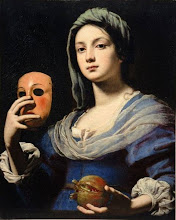
Some philosophers deny that the concept of "being" has any meaning at all, since we only define an object's existence by its relation to other objects, and actions it undertakes. The term "I am" has no meaning by itself; it must have an action or relation appended to it. This in turn has led to the thought that "being" and nothingness are closely related, developed in existential philosophy.
- Wikipedia
Tuesday, October 16, 2007


Ownership of Identity
Jean-Luc Nancy believes that the in-between moment is not about what lays between subjects, as a subject of the ego, which for Nancy does not exist. Having intersubjectivity without subjects is important for Nancy because it points to a concept of self that is prior to a self that contains the property of an ego. The ‘as’ structures of self, by Nancy’s account, is not about ownership of identity, neither that of one’s own nor that of the other. Through the ‘as such’ structure of self, the ‘I’ as a self that owns an ego, gets displaced as follows: Ego sum=ego cum, being-with=thinking-with. As such, one’s presentation of self is exposed through a community, in being with others. This is in essence what Nancy is trying to do in revising the Cartesian logos as “Cogito Ergo Sum”, “I think, therefore I am”, which changes the gaze of one’s in accordance to rule following and execution of order. So if “order of thought” is what determines “order of execution”, then multiplicity of meaning encased in one’s experiences of the different as “praxis of meaning”, requires a non-subject-descriptor of the in-between that makes certain notions of behavior less mechanical while at the same time, less mysterious.
Monday, October 15, 2007
Electric Sheep

Electric Sheep by Sakura Graphics
Egolessness does not mean becoming a sheep, or an android - an apparently autonomous organism that is really no more than a lifeless circuit in a vast machine.
Self-realisation gives a person initiative, drive, originality, intelligence, leadership qualities, an assertiveness which achieves results without dominating 'others', indomitability, freedom (all the qualities associated with being a strong individual)
These are all qualities of the single Self, which express themselves after Self-realisation.
Ego is not the source of strong individuals, it is pathological, and ultimately weakening.
It is not the free expression of Selfhood, rather it is a symptom of possessiveness.
Non-possessiveness is not incompatible with being a strong individual, in fact it is the prerequisite for being a strong individual.
Friday, October 12, 2007
The Kundalini as Spiritus Sanctus

From the Chants of Hildegard von Bingen:
Spiritus Sanctus vivificans vita,
movens omnia, et radix est in omni creatura,
ac omnia de immunditia abluit,
tergens crimina, ac ungit vulnera,
et sic est fulgens ac laudabilis vita,
suscitans et resuscitans omnia.
English Translation:
Holy Spirit, bestowing life unto life,
moving in All.
You are the root of all creatures,
washing away all impurity,
scouring guilt, and anointing wounds.
Thus you are luminous and praiseworthy,
Life, awakening, and re-awakening all that is.
According to yoga knowledge, the Kundalini is the Root of the Tree of Life (the Subtle System of Chakras)
In Sahaja yoga the Kundalini is experienced as a cool breeze - the Divine Breath (Ruach):
"I am the breeze that nourishes all things green,
I encourage blossoms to flourish with ripening fruits.
I am the rain coming from the dew
that causes the grasses to laugh with the joy of life."
- Hildegard Von Bingen, medieval abbess, mystic and upbraider of popes, quoting the Holy Spirit
Self and Imagination. The imaginary self
"The natural scientific thought is that the identity of a human being is just that of a large mammal undergoing the natural process of birth, aging and eventual death. The real enemy of this thought is our imagination, which enables us to envisage ourselves born to a different body at a different time, or even floating free of our present reincarnation and surviving as heaven-knows-what.
....The first serious opponent of the notion that imagination can help define identity in western philosophy was David Hume.
Literary and narrative conceptions of the self that have been prominent since the late 20th century, which have us constantly telling and retelling ourselves who we are, thereby constructing our identities in something like the way an author constructs a character. Selves become useful fictions, a notion that has appealed to some neurophysiologists anxious to find a unifying function that ties together the otherwise heterogeneous structures or 'modules' responsible for how we respond to the world.
The awkward, lurking question of who is the author (and who the audience) of these stories is best left a little vague."
New Scientist, August 2006.
After Self-realisation, the faculty of the human imagination becomes one with the Imagination of the Universal Self. The Self imagines itself however it pleases, and that imagining is reality.
Wednesday, October 10, 2007
Names

Ludwig Wittgenstein, at an early age, already caught up by deep philosophical problems.
Wittgenstein's anti-Cartesianism is evident in the Blue Book "where he writes, first, that our language creates the illusion that the word 'I' refers to 'something bodiless, which, however, has its seat in our body," and then concludes: 'In fact this seems to be the real ego, the one of which it was said, "Cogito, ergo sum".'
he returns to the theme once again in the Philosophical Investigations where he writes: " 'I' is not the name of a person, nor 'here' of a place, and 'this' is not a name. But they are connected with names.
Names are explained by means of them. It is also true that it is characteristic of physics not to use these words." (P.I.,410)
In the Tractatus he states that "there is no such thing as the soul" (TLP5.5422)
He uses the words 'soul' and 'subject' interchangeably, so what he was really getting at was that the subject (self) does not exist as an object. He considered the self, the 'I', to be a mystery inaccessible to thought, which is based on language.
"language disguises thought. So much so, that from the outward form of the clothing it is impossible to infer the form of the thought beneath it."
It became apparent to Wittgenstein that the subject cannot be conceived of in Cartesian terms as both simple and representing (ie. thinking, believing, judging, etc.) These two characteristics, which the classical modern tradition from Descartes to Leibniz to Russel has taken to be compatible, are, in fact, not so. And with this observation he cuts through the Gordian knot of the modern conception of the subject. The idea that a simple self could also be a representing self is indeed absurd.
Wittgenstein rejects the idea of a composite subject: "a composite soul would no longer be a soul."
Chakras and the Zodiac

Here is a TENTATIVE, SPECULATIVE, suggested correspondence between the parts of the subtle system (seven Chakras, Kundalini and Void) and the twelve signs of the zodiac. And also the Archetypes of the Collective Unconscious.
Notice that we are ascending in a serpentine fashion, oscillating from left to right and back again.
This is the way the Kundalini moves.
CAPRICORN - Earth - Chakra = Left Mooladhara and Left/Back Agyna,
Presiding Deity = Shri Ganesha,
Archetype = (The Child), Quality = overcoming obstacles
AQUARIUS - Air - The Kundalini, the Divine Breath, The Cool Breeze of the Holy Spirit.
Note: the Kundalini is not a chakra, but the source of the energy that nourishes them.
PISCES - Water - Void
(The Ocean of Illusion, and the Wise old man or woman/Guru that takes one across it)
ARIES - Fire - Right Mooladhara and Right/Front Agnya, Shri Kartikeya
(The Warrior) destroying negativity.
Note Shri Kartikeya is a warrior child, and the sign Aries fits that description better than any other.
TAURUS - Earth- Left Swadisthana?
GEMINI - Air - Right Swadisthana, Shri Hanumana, Mercury
(The Trickster)
CANCER - Water - Left Nabhi -Left heart
(The Housewife), motherliness, food
LEO - Fire - Right Heart, Shri Rama,
(The Solar Hero)
Note: the right nabhi chakra is associated with royal dignity, so perhaps it is also ruled by Leo.
VIRGO - Earth - Left Visshuddhi, Shri Vishnumaya
(The Virgin)
LIBRA - Air - Right Visshuddhi?
Note: the quality of the right visshuddhi is diplomacy. In Astrology Libra is associated with that.
SCORPIO - Water - Left Sahasrara, Brahmarandhra, rebirth/death of ego
SAGITTARIUS - Fire - Right Sahasrara, Shri Kalki (Horse-headed deity)
moksha/freedom

Note: in the Indian calendar the year starts with the sign Capricorn,
and it is an alternative to Aries as the first sign of the zodiac.
Each of the seven chakras has a left and a right aspect.
The left aspects are of the Yin elements (earth and water) while the right side is Yang (fire and air).
There is a strong link between the Mooladhara and Agnya chakras.
HH Shri Mataji Nirmala Devi has mentioned the correspondence between several of the signs and chakras,
and I have based the above on these insights.
To my knowledge Shri Mataji hasn't physically drawn a chart like this but has referred to the signs and their chakra in different talks. I merely did the chart as a summary of that
and tried to fill in the gaps in a speculative but logical manner.
Wednesday, October 03, 2007
Charlotte Perkins Gilman
"So when the great word ‘Mother!’ rang once more,
I saw at last its meaning and its place;
Not the blind passion of the brooding past,
But Mother - the World's Mother - come at last,
To love as she had never loved before
-To feed and guard and teach the human race."
- Charlotte Perkins Gilman (1860-1935)
American writer, artist and social reformer.
I saw at last its meaning and its place;
Not the blind passion of the brooding past,
But Mother - the World's Mother - come at last,
To love as she had never loved before
-To feed and guard and teach the human race."
- Charlotte Perkins Gilman (1860-1935)
American writer, artist and social reformer.

Sahasrara

When the Kundalini energy reaches the 7th subtle centre in the body, at the crown of the head, the yogi realises the single Self, and knows that individual selves are an illusion. This chakra is the Sahasrara - the Lotus of a Thousand Petals. The medieval Italian poet Dante saw it in mystic vision as the Sempiternal Rose, "its petals rising in more than a thousand tiers are the thrones of the blessed."

The Kundalini emerges through a subtle opening known as the Brahmarandhra - the Aperture of Brahma. Sanskrit 'randhra' = a slit, split, opening, aperture, hole, chasm, fissure, cavity. (probably related to the English word 'rend' - to split)
This subtle opening also manifests on the physical level - in infants the bones forming the skull are not completely fused and there is an opening called the fontanelle - a word suggestive of the emergence of the fountain-like, upward-springing Kundalini from the top of the head.
Monday, October 01, 2007
Who is troubled?
From both science and (so-called) mysticism
we know intellectually that the ego-self
we know intellectually that the ego-self
can not possibly exist,
yet we still feel troubled by a sense
yet we still feel troubled by a sense
of being an owner of a body and a life,
an owner who fears suffering and desires pleasure.
These fears and desires trouble us,
and we try to rid ourselves of this
illusory sense of ownership,
but rather than trying to wish it away mentally,
one should ask the question:
These fears and desires trouble us,
and we try to rid ourselves of this
illusory sense of ownership,
but rather than trying to wish it away mentally,
one should ask the question:
"Who is being troubled?".
Through inquiry into the source of this illusion
it disappears by itself, just as a weed is destroyed
by finding it's root and cutting it off.
- Paraphrase of Advaita Vedanta philosophy.
- Paraphrase of Advaita Vedanta philosophy.
Tuesday, September 25, 2007
Interior Origin
De-authentication. A more subtle mode of self-erosion also results from the increasing inundation of images, stories, and information. Consider those confirmatory moments of individual authorship, moments in which the sense of authentic action becomes most fully transparent. Given the Western tradition of individualism, these are typically moments in which we apprehend our actions as unique, in which we are not merely duplicating models, obeying orders, or following convention. Rather, in the innovative act we locate a guarantee of self as originative source, a creative agent. Yet, in a world in which technologies facilitate an enormous sophistication about cultural conventions, such moments become increasingly rare. How is it, for example, that a young couple, each of whom has been inundated for twenty-some years by romance narratives - on television and radio, in film, magazines, and books - can utter a sweet word of endearment without a haunting sense of cliché? Or in Umberto Eco's terms, how can a man who loves a cultivated woman say to her, "'I love you madly," when "he knows that she knows (and that she knows that he knows) that these words have already been written by Barbara Cartland?" In what sense can one stand out from the crowd in a singular display of moral fortitude, and not hear the voice of John Wayne, Gary Cooper, or Harrison Ford over one's shoulder?
Commodification of the self. These arguments are closely tied to a final, technology-induced shift in cultural understanding. Because the technologies of sociation enable information to be disseminated widely at low cost, popular entertainment has become a major industry. Critical to the entertainment industry are individual performers -individuals who, because they are entertaining, command a broad audience and vast remuneration. In effect, the "self" becomes available as a saleable commodity. Individual performers may take on new names, spouses, and lifestyles in order to increase their fame and income. As the entertainment industry expands, and as television channels become more numerous, the demand for "characters" becomes ever wider. Increasingly, the common person - owing to a peculiar passion, unique story, act of heroism or stupidity, or possession of inside information - becomes a potential candidate for fame and fortune. Consequently, there is a growing consciousness of the self as a commodity. Being true to one's self, possessing depth of character, and searching for one's identity all become old-fashioned phrases; they are nicely suited to earlier times but no longer profitable.
Each of these tendencies--toward polyvocality, plasticity, de-authentication and commodification of self--undermines the long-standing importance placed on the integral self, that core to which one's actions should be true. Although this erosion is lamentable in significant respects, it is also important to take note of growing criticism of the Western, traditional concept of individual selves.
On the conceptual level, the problem is not simply that the conception of a private mind carries with it all the thorny problems of epistemological dualism (subject vs. object, mind vs. body, minds knowing other minds), but also that the very idea of an independent decisionmaker proves uncompelling. How, it is asked, could mental deliberation take place except within the categories supplied by the culture? If we were to subtract the entire vocabulary of the culture from individual subjectivity, how could the individual form questions about justice, duty, rights, or moral good? In Michael Sandel's terms, "to imagine a person incapable of constitutive attachments ... is not to conceive an ideally free and rational agent, but to imagine a person wholly without character, without moral depth."
These conceptual problems are conjoined with a widespread ideological critique. Alexis de Tocqueville's observations of nineteenth-century U.S. life set the stage: "Individualism is a calm and considered feeling which disposes each citizen to isolate himself from the mass of his fellows ... he gladly leaves the greater society to look after himself." In recent decades these views have been echoed and amplified by many scholars. Christopher Lasch has traced the close association between individualist presumptions and cultural tendencies toward "me-first" narcissism; R. N. Bellah and his colleagues argue that modern individualism works against the possibility of committed relationships and dedication to community; for Edward Sampson, the presumption of a self-contained individual leads to social division and insensitivity to minority voices.
Ultimately, the concept of an interior origin of action defines the society in terms of unbreachable isolation. If what is most central to our existence is hidden from others, and vice versa, we are forever left with a sense of profound isolation, an inability to ever know what lies behind another's mask. With strong belief in an interior self, we inevitably create the Other to whom we shall forever remain alien.
Commodification of the self. These arguments are closely tied to a final, technology-induced shift in cultural understanding. Because the technologies of sociation enable information to be disseminated widely at low cost, popular entertainment has become a major industry. Critical to the entertainment industry are individual performers -individuals who, because they are entertaining, command a broad audience and vast remuneration. In effect, the "self" becomes available as a saleable commodity. Individual performers may take on new names, spouses, and lifestyles in order to increase their fame and income. As the entertainment industry expands, and as television channels become more numerous, the demand for "characters" becomes ever wider. Increasingly, the common person - owing to a peculiar passion, unique story, act of heroism or stupidity, or possession of inside information - becomes a potential candidate for fame and fortune. Consequently, there is a growing consciousness of the self as a commodity. Being true to one's self, possessing depth of character, and searching for one's identity all become old-fashioned phrases; they are nicely suited to earlier times but no longer profitable.
Each of these tendencies--toward polyvocality, plasticity, de-authentication and commodification of self--undermines the long-standing importance placed on the integral self, that core to which one's actions should be true. Although this erosion is lamentable in significant respects, it is also important to take note of growing criticism of the Western, traditional concept of individual selves.
On the conceptual level, the problem is not simply that the conception of a private mind carries with it all the thorny problems of epistemological dualism (subject vs. object, mind vs. body, minds knowing other minds), but also that the very idea of an independent decisionmaker proves uncompelling. How, it is asked, could mental deliberation take place except within the categories supplied by the culture? If we were to subtract the entire vocabulary of the culture from individual subjectivity, how could the individual form questions about justice, duty, rights, or moral good? In Michael Sandel's terms, "to imagine a person incapable of constitutive attachments ... is not to conceive an ideally free and rational agent, but to imagine a person wholly without character, without moral depth."
These conceptual problems are conjoined with a widespread ideological critique. Alexis de Tocqueville's observations of nineteenth-century U.S. life set the stage: "Individualism is a calm and considered feeling which disposes each citizen to isolate himself from the mass of his fellows ... he gladly leaves the greater society to look after himself." In recent decades these views have been echoed and amplified by many scholars. Christopher Lasch has traced the close association between individualist presumptions and cultural tendencies toward "me-first" narcissism; R. N. Bellah and his colleagues argue that modern individualism works against the possibility of committed relationships and dedication to community; for Edward Sampson, the presumption of a self-contained individual leads to social division and insensitivity to minority voices.
Ultimately, the concept of an interior origin of action defines the society in terms of unbreachable isolation. If what is most central to our existence is hidden from others, and vice versa, we are forever left with a sense of profound isolation, an inability to ever know what lies behind another's mask. With strong belief in an interior self, we inevitably create the Other to whom we shall forever remain alien.
-Kenneth J. Gergen
Saturday, September 22, 2007
There is only one mind

"There is only one light of the sun,
though it is intercepted by walls and mountains
and thousands of other objects.
There is only one common substance of the whole world,
though it is restrained in an infinite number
of different forms or bodies.
There is only one common soul,
though it is divided into innumerable
particular essences and natures.
There is only one mind,
though it seems to be divided..."
-Marcus Aurelius, Emperor of Rome.
Wednesday, September 19, 2007
A mythical being is indestructible
That which is not real cannot be destroyed.
A flying pig is invulnerable.
A fairytale cannot be contradicted.
A myth cannot be unmade,
only forgotten.
Rather than trying to destroy the ego,
one should witness it.
A flying pig is invulnerable.
A fairytale cannot be contradicted.
A myth cannot be unmade,
only forgotten.
Rather than trying to destroy the ego,
one should witness it.
Sunday, September 09, 2007
Tuesday, September 04, 2007
Religion and Morality
Intrinsic religiosity - belief in God and collective worship as an end in itself.
Extrinsic religiosity - religion and collective worship are seen as primarily social activities, often undertaken for personal gain.
A specialist in cultural evolution, Peter Richardson, and a human ecologist, Brian Paciotti, both from the University of California, used games to test groups of people for altruistic qualities such as generosity, trust and fairness. They found that there was a difference between secular and religious people. Religious people did give more; however, the team found that "only people with intrinsic or questing religiosity were more generous and trusting, and less likely to punish unfairly. Extrinsically religious people were actually less altruistic than the non-religious."

Extrinsic religiosity - religion and collective worship are seen as primarily social activities, often undertaken for personal gain.
A specialist in cultural evolution, Peter Richardson, and a human ecologist, Brian Paciotti, both from the University of California, used games to test groups of people for altruistic qualities such as generosity, trust and fairness. They found that there was a difference between secular and religious people. Religious people did give more; however, the team found that "only people with intrinsic or questing religiosity were more generous and trusting, and less likely to punish unfairly. Extrinsically religious people were actually less altruistic than the non-religious."
Paciotti believes that the findings support the idea that humans are hard-wired to be moral and cooperative (like other primates who live in groups), with religion serving to define the nature and scope of that moral behaviour and influence with whom we cooperate.
"We do not need religion to live moral lives, but without it morality might never have evolved." writes Helen Phillips.
-New Scientist, 15 September 2007.
.
Yoga philosophy also states that dharma (morality) is innate. In Ayurveda, Indian traditional medicine, adharma (immorality) is seen as a cause of disease because it goes against the dharma which regulates not only the community but the body itself. No amount of herbs and cleansing practices will cure a disease if the sick person continues to transgress their in-born moral structure.

Subscribe to:
Comments (Atom)