|
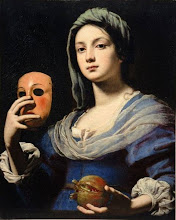
| Jean-Baptiste Greuze, Portrait of Mozart, detail |
Wednesday, April 26, 2023


Monday, June 06, 2022
The Chakras As Centres of Influence Through History

Shri Mataji Nirmala Devi has identified the various regions of the Earth that correspond to the seven Chakras, the Kundalini, and the Void. I noticed that the succession of Empires and cultures throughout history seems to follow a path of ascent through the chakras, but in a serpentine fashion, alternating from left to right. And I thought to make this tentative diagram. I am not making any judgments here about the morality of these empires and superpowers, they each had their day in the sun, then dissolved, though some of their influence continued. The concept of a world government is controversial, I know. I see the final, future Sahasrara stage, not as an authoritarian 'New World Order', but as a spiritual union of equals, various countries and cultures, with, perhaps, a centre of government in the Himalayan region, where the large, populous nations: China, the former Soviet Union and India meet.
Note: the Left Agnya is on the right side of the head, as the Ida Nadi and Pingala Nadis cross over at the sixth centre. The Australian aborigines did not have an empire as such, but their culture and deep spirituality arose many thousands of years ago, and must have had a subtle influence on the development of humankind.
Please feel free to share this diagram, but please do not remove the credit. Thanks.
Tuesday, April 26, 2022
Hildegard von Bingen, Sequence for the Holy Spirit
the all—up in the heights, upon the earth,
and in the every depth—
you bind and gather all together.
From you the clouds flow forth, the wind takes flight,
the stones their moisture hold,
the waters rivers spring,
and earth viridity exudes.
-Hildegard von Bingen, Sequence for the Holy Spirit, excerpt, translation by Nathaniel M. Campbell
 |
| Franklin Carmichael |
Sunday, December 19, 2021
Exchange between Sri Dnyanadeva and His Teacher
 |
| Sant Jnanadeva |
Nivruttinath says, Oh Dnyanadeva,
you are purified by Self-realisation.
By understanding the Self,
you and your devotion have become
one with the Universe.
The doubts and division
between you and God
have disappeared.
Reigning in your mind,
God has appeared in your heart.
Now with His omnipresence,
there is no emptiness.
Nivruttinath says, Oh Dnyanadeva,
you are purified by Self-realisation.
The brightness of this light of knowledge
has outshined everything else in this world,
and the flames of desires inside you
are extinguished.
Nivruttinath says, Oh Dnyanadeva,
you are purified by Self-realisation.
With the disappearance of these desires,
the whole world is filled with God’s presence.
Nivruttinath says, Oh Dnyanadeva,
you are purified by Self-realisation.
Dnyanadeva says, with the ultimate teachings
of Nivruttinath,
Dnyanadeva realised complete
mercy and contentment
Tuesday, November 09, 2021
Wilderness Awakening

Wednesday, October 27, 2021
Seeing Swirling Commas of Light in the Sky

Monday, October 04, 2021
Hildegard von Bingen's Vision of the Divine Feminine
She is so bright and glorious that you cannot look at Her face or Her garments for the splendour with which She shines. For She is terrible with the terror of the avenging lightning, and gentle with the goodness of the bright sun; and both Her terror and Her gentleness are incomprehensible to humans . . . . But She is with everyone and in everyone, and so beautiful is Her secret that no person can know the sweetness with which She sustains people, and spares them in inscrutable mercy.
- Hildegard von Bingen’s vision of the Feminine Divine, from Scivias, III, 4.15, translated by Mother Columba Hart, O.S.B. and Jane Bishop
 |
Tuesday, August 10, 2021
Chakra Scroll


The top image represents the state above the Sahasrara Chakra called Pralaya, the dissolution of the universe before it is recreated.
The sage Markandeya is shown worshipping Lord Vishnu in the form of an infant sucking his toe (symbolising the sweetness of surrendering to the Lotus Feet of the Divine). All that exists is The Self (Lord Vishnu), the ocean of existence (pure undifferentiated being), a banyan tree (representing Self-knowledge), and the sage (the witness).
Other images are of some of the chakras.
The bottom image is of the Kundalini, the coiled spiritual energy which connects us with the All-pervading Supreme Self.
Thursday, July 22, 2021
The Lady Truth
 |
| Petrarch and Laura de Noves, Ashmolean Museum |
“Often have I wondered with much curiosity as to our coming into this world and what will follow our departure. When I was ruminating lately on this matter, not in any dream as one in sickness and slumber, but wide awake and with all my wits about me, I was greatly astonished to behold a very beautiful Lady, shining with an indescribable light about her. She seemed as one whose beauty is not known, as it might be, to mankind. I could not tell how she came there, but from her raiment and appearance I judged her a fair Virgin, and her eyes, like the sun, seemed to send forth rays of such light that they made me lower my own before her, so that I was afraid to look up.”
“it occurred to me this could be none other than Truth herself.”
-Petrarch, Secretus
Tuesday, June 29, 2021

Angelus Silesius
Angelus Silesius was a 17th century Christian mystic, native to Silesia, in what is now Poland, and was known as
The Prophet of the Ineffable. He composed spiritual epigrams mostly in the form of couplets written in German, and was influenced by his reading of medieval mystics such as Meister Eckhart
and Jan van Ruysbroeck.
Most of the English translations I have seen of his epigrams are very outdated, and sometimes horribly contorted in order to make them rhyme in English.
I think Silesius wrote them as rhyming verses, but it's not always possible to translate such concise rhyming couplets into another
language successfully.
Here are some renderings I've made from them, some freer than others in adherence to the originals. They are not intended to be
accurate translations, and I didn't try to make them rhyme.
I was struck by the similarity of some of Angelus's poems to Indian mystical writing.
Search within yourself.
The Philosopher’s Stone,
the key to transformation,
cannot be found outside.
The entire Universe,
Heaven, Hell and Earth,
are all within you.
Whatever you desire,
you already have.
The world does not contain you;
you contain the world.
You are yourself the world
and you contain nothing but yourself.
God is no thing.
He is untouched
by time or matter
God is heard in silence,
and is best worshipped in silence.
The saint does not look forward
to a heaven in an afterlife;
he lives in heaven now.
You cannot enter heaven;
heaven is who you are.
Before there was a sense of a separate I,
there was only Universal Being.
And when the separateness disintegrates,
you will know you are that Universal Being.
Time is timeless;
it is only the mind that
tries
to measure what is measureless.
God is gold hidden in river sand,
and love is river water,
washing God into view.
The rose has no rationale,
it simply blooms.
Joy can only be experienced
by dissolving the sense of ‘I’ and ‘other’
in the ocean of Unity.
Love is a faster way to God than knowledge.
God pours Himself out into Creation
for Eternity,
yet He is undiminished.
Without rebirth we are like rivers
which turn back from the ocean.
Theologians form different schools
to describe God,
but the school of the Spirit within you
teaches you to know God.
When the human heart
becomes attuned to God,
the whole everlasting cosmos
becomes a bell that rings.
Those who know God’s depths
also attain His peaks.
We think a child foolish
for crying over a broken doll,
but are the things we covet
any more alive than a doll?
When you heart is pulled
neither by attraction nor aversion,
it rests in God.
The richness and vastness of God
is like an undiscovered continent.
Even if God was to be born
a thousand times to Mary,
in Bethlehem,
it would do you no good
if you do not bear Him within yourself.
The saint knows that all possessions
are nothing but himself.
The owner of the world’s greatest treasure
is poorer than a beggar
if he sees that treasure as other than himself.
God is one without an other.
To know God, the knower must know
that he is one with the known.
A loaf contains many grains,
and the sea countless drops;
so is God both one and many.
The All emerges from the One
and to the One the All returns.
If you do not become reborn in God
you do not value His birth in Bethlehem,
and if your separateness does not die,
His death at Golgotha will not save you.
God and Self are one.
If the Self ceased to exist
God would cease to exist.
 |
| Rose Window, Milan Cathedral |
Tuesday, May 04, 2021


The Singular Substance
Spinoza believed that there is only one substance to reality, and that this singlular Substance is God/Nature, the immanent, not the transitive cause of all things’ and ‘absolutely infinite’.
Indian Advaita philosophy also posits that God and the world are one and the same. The Western mind has difficulty with the concept that God is immanent and not separate from world and Self, but Spinoza's Substance Monism gives Monotheism its true meaning: there is no being but God.
 |
| Baruch Spinoza |
"The more you struggle to live, the less you live.
Give up the notion that you must be sure of what you are doing.Instead, surrender to what is real within you,
for that alone is sure….
you are above everything distressing."
- Baruch Spinoza
for that alone is sure….
you are above everything distressing."
- Baruch Spinoza
Thursday, January 28, 2021
Friday, January 01, 2021
Saga of the Oak
Everything is part of me,
Firmament and moving sea;
I of all that is am part,
Stone and star and human heart.
Primal Cause etern, self-wrought,
Majesty transcending thought.
-William H. Venable
 |
Sunday, September 27, 2020
Shri Nanakiji
 |
| Nanaka and Nanaki, digital edit, by Jeronimus, of Indian calendar art |
She recognised her brother's holiness, from his infancy, and became a protective mother figure to him. She encouraged her brother's spiritual life, and was his first follower (the first Sikh). She suggested that he use music as a vehicle for spreading his teaching.
Shri Mataji has identified Nanaki as an incarnation of the Goddess, Devi. Shri Devi is the fiercely protective warrior aspect of the Goddess, but sometimes she takes birth as a close relative of great spiritual masters, to give them support in a quieter role.
Subscribe to:
Posts (Atom)