Showing posts with label meditation. Show all posts

Monday, May 13, 2024

The Aura


Roman Altar of Peace


In ancient Roman art, divine figures were often depicted with a veil forming an arch around them, as if billowing from a breeze emanating from their own body. This artistic device is called a velificatio, a term related to the word ‘veil’. The velificatio is also associated with rebirth and the vault of heaven.

The Kundalini energy is felt as an inner cool breeze, which not only refreshes and nourishes the subtle body, but generates a protective aura around it. Ancient Indian yoga texts use the term kosha ‘sheath’, and there is no close equivalent of the term ‘aura’.

In ancient Greek mythology, the Aurae were wind deities, who were often depicted with a velificatio, (the device spread via Greco-Buddhist Central Asia as far as Japan). 19th century spiritualists associated the velificatio with the subtle energy field they postulated, and started to use the word “aura” to refer to this emanation.

Shri Mataji Nirmala Devi has recommended the use of a bandhan, before and after meditation, as a protection. The bandhan is a movement of the right hand in an arch over the body, seven times, once for each of the auras generated by the seven chakras awakened by the Kundalini. It should be performed with the power of the attention, which is purified and strengthened by the Kundalini, the Cool Breeze.

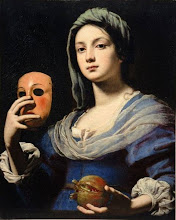
After Louis F Elle the Younger, portrait of a lady as Iris, the messenger goddess, source: Wikipedia


Tuesday, May 07, 2024

The Queen and Governess of the World

A few quotes from the 17th century English Puritan preacher and author Thomas Watson:

"The providence of God is 'the queen and governess of the world.' It is the eye which sees, and the hand which turns all the wheels in the universe."

"Meditation is the saints’ perspective glass, by which they see “things invisible.” It is the golden ladder by which they ascend in holy imagination to heaven. It is the dove sent out, and which brings back the olive-branch of peace."

"The wheels of a chariot are an emblem of contentment: the wheels move, the axle stirs not. When change and motion are around us, a contented spirit remains firm in its centre."

The Wheel of Fortune, from John Lydgate’s Troy Book and Siege of Thebes


Tuesday, April 09, 2019

The Blessings of the Sun


Surya Narayana, Basohli.

If you are absolutely effortless, meditation will work the best. Do not think about your problems at all. Just expose yourself to the vibrations. When the sun shines, all of nature exposes itself to the sun and receives the blessings of the sun effortlessly. It does not put in any effort. It just receives the sun. The sun’s rays start acting. In the same way, the all-pervading power starts working. You are not to maneuvre it. You are not to do anything about it. Just be effortless, absolutely effortless. It will go on working as long as it can and it will do the miracle that it has to do. You do not have to worry about it. It knows its job, but when you put an effort, you actually create a barrier for it. So no effort is needed. Be absolutely effortless, and say, “Let it go, let it go. “ That’s all.
-Shri Mataji Nirmala Devi

Sunday, April 26, 2015

Inner Being


Deborah Stevenson, Time out of Mind, paper collage.
Image used with kind permission of the artist.
See more of her work at deborahstevenson.com


Try to meditate. 
Meditate more, so that you reach that inner being. 
And this inner being is the vast ocean of bliss 
which exists inside every one of us.

-Shri Mataji Nirmala Devi, 1983


According to several Indian teachings, including that of Guru Nanaka, the founder of the Sikh religion, the inner Self and the universe "outside" are one and the same. No part of the infinite cosmos, with all it's countless swirling galaxies, is outside the ambit of who you are.

One of the main obstacles to meditation is the mind's objection to being quietened - something it tends to see as a form of limitation. However, contrary to the mind's expectations, genuine states of meditation are characterised by a sense of expansiveness in consciousness; something Buddhists call the Vast Mind.

The poet and translator, Patricia Donegan, uses the composition and reading of the Japanese Haiku form as an awareness practice, a means of realising the Vast Mind. In her book, Haiku Mind, she writes: "to create and appreciate this tiny form of poetry, one needs a vast mind like the sky." 


Wednesday, May 14, 2014

Lord Buddha on Meditation

Lord Buddha was asked, “What have you gained from meditation?”
“Nothing”, he replied, “However let me tell you what I lost:
anger, anxiety, depression, insecurity, fear of old age and death.”

Today is Shri Buddha Purnima, the full moon day on which the birthday of Lord Buddha is celebrated.


Shri Padmapani Buddha, Ajanta Caves, Maharashtra, India

Friday, March 14, 2014

Meditation


Shri Mataji Nirmala Devi on meditation.
Image by Graham Brown, 2014.

Sunday, March 09, 2014

Phra Mae Thorani


Phra Mae Thorani is a Thai and Laotian Earth Mother goddess sometimes depicted beneath images of the Buddha. 
The water she wrings from her hair represents detachment, which drowns the demons sent to distract the Buddha from attaining enlightenment.
The Buddha is often depicted with one hand touching the Earth, as a sign that he is seeking the Mother's aid in attaining liberation. This Earth-touching gesture is called the Bhumisparsha Mudra, and signifies the moment when the Demon Mara (delusion) challenged the Buddha's right to gain enlightenment. Mara claimed that his own spiritual achievements surpassed those of the Buddha, and his countless demon soldiers attested to this. The Buddha, in turn, called on the Mother Earth to attest to his worthiness. The testimony of a deity as important as the Earth Goddess trumped that of Mara's army.

Reading about The Buddha's use of the Mother Earth reminded me of the importance of regularly sitting on the ground (weather permitting). It gives a firm foundation to one's meditative practice, and an 'earth', in the electrical sense, for superfluous or unbalanced energies in the body and mind.
While sitting on the ground you can respectfully ask the Mother Earth to remove your physical and spiritual problems. This is something Shri Mataji Nirmala Devi has recommended.

Sunday, October 13, 2013

Shri Durga


We are presently at the culmination of Navaratri, a nine night festival dedicated to Shri Durga, the fiercely protective Mother Goddess, who defeated the demonic forces threatening her children: the gods and human beings.

"The greatest thing is the blessings of the Mother, the way She looks after you, the way She loves you and the way She cares for you, which you should never take for granted. You must meditate, it's very important. No question, without meditation you can't keep yourself all right, it's no question. Meditation is the most important thing which must be followed, because that's how you come close to Her vibrations, come to Her nature."

-Shri Mataji Nirmal Devi, Navaratri 2002

Tuesday, May 07, 2013

The Lotus of a Thousand Petals


The Sahasrara Chakra is the seventh and highest centre of the subtle body, and is located at the crown of the head.

In this antique diagram, it is depicted as a white lotus of many petals. (In yoga texts, the Sahasrara is described as having a thousand petals).
At the centre of the lotus are the feet of the Supreme Being/Self. One is shown white, representing Shri Shiva (the masculine, un-manifest half of the Self), and one red, representing Shri Shakti (the feminine, creative half of the Self).
The trikona, or triangle, may represent the three qualities that pervade the universe: the creative, sustaining and destructive powers, enclosed by the circle of time.

A beautiful image from Indian devotional poetry reveals the crown of the head as a pedestal on which the cool, fragrant, lotus feet of the Divine may rest. In India, the feet of the Divine are considered to pour out blessings and auspicious vibrations, just as in Hindu mythology, the sacred Ganges, source of all sustenance, is said to flow from the feet of Lord Vishnu.

When a person's sahasrara opens, they experience Self-realisation. After this happens, Shri Mataji Nirmala Devi recommends daily meditation with the attention lightly on the sahasrara. Some ancient yoga texts say to put the attention on the brow centre, but these were probably written with the assumption that the aspirant would not yet have had self-realisation - an achievement considered very rare and difficult in previous times. Placing the attention at the crown for meditation, means that the awareness is above the distractions of the mental level, as the lotus of sahasrara blooms above the turbulent or murky waters of the lake of mind, and its petals repel the droplets of thoughts.

In Jewish mysticism, the Sephirot centre known as Kether (literally 'crown'), is similar in it's qualities to the Sahasrara of yoga philosophy. Situated at the top of the Tree of Life within the body, it represents pure consciousness and union with the Divine.
The mystical Sufi strain of Islam has a system of subtle centres known as latifas. The highest latifa: Akfha (the 'most subtle') is also located at the crown of the head, and is the point of unity where beatific visions of Allah are directly revealed.

Modern, New Age interpretations often depict the Sahasrara as having a violet or purple colour, but this is not seen in traditional paintings and scriptures. This probably comes from the idea that the colours of the chakras follow the colours of the rainbow, starting with red at the first centre, orange yellow green blue and violet. Traditionally, however, the white colour represents the purity of this centre, and its integration of all the elements and colours. White contains all colours. 
Sometimes it is described as a lotus of multicoloured petals, and often depicted as an inverted lotus, with the petals opening downward to release divine nectar and fragrance into the brain.

This South Indian temple is crowned by an inverted sahasrara lotus.


Friday, August 31, 2012

Steve Jobs on Meditation

“If you just sit and observe, you will see how restless your mind is,” Jobs told his biographer, Walter Isaacson. “If you try to calm it, it only makes it worse, but over time it does calm, and when it does, there’s room to hear more subtle things, that’s when your intuition starts to blossom and you start to see things more clearly and be in the present more. Your mind just slows down, and you see a tremendous expanse in the moment. You see so much more than you could see before. It’s a discipline; you have to practise it.”
-Steve Jobs CEO of Apple.
Steve Jobs in his Zen apartment


Jobs was a practitioner of Zen Buddhism. He took it up seriously, not just as a passing fad. Buddhism is part of the philosophical tradition of non-duality, and this may have influenced Jobs to converge different technologies and media into a single simple device. Being half-Syrian probably gave him a sense of being the convergence of two worlds. 
The Zen aesthetic is certainly there in the design of Apple products.

Wednesday, August 15, 2012

Mental Silence Study


Meditation has two distinct meanings. One meaning of meditation refers to a psychological centering device such as mantra recitation, focus on the breath, mindfulness, or a visual focus. Psychological centering devices help one feel more relaxed and centered. The other meaning of meditation is the experience of complete mental silence. Traditionally, the purpose of centering devices is to achieve complete mental silence. Although the dual meanings of meditation have been documented since at least 1977, most studies involving meditation focus on centering devices and ignore the question of whether participants experience complete mental silence.
Remarkably, the experience of complete mental silence is practically unstudied in psychology. I believe that the experience of mental silence is more common than reference works on positive psychology suggest.
-Joshua Pritikin

I recently participated in Joshua's survey on the subjective passage of time and mental silence. I found it thought provoking and enjoyed going through it. You might enjoy it too. Take a look: http://tiny.cc/q2qmfw 

Saturday, September 10, 2011

Foot-soaking

Mughal miniature painting of a princess cooling her feet in a pool of water.


Meditation is the best way of connecting with the Universal Self, beyond thought. Often, especially with busy modern lifestyles, the subtle energies in the body are not in balance, which disturbs the attention and makes it difficult to go into a state of thoughtless awareness. One method to balance the energies of the subtle body, as an adjunct to meditation, is to use water as a treatment. Foot-soaking is a simple and relaxing technique taught by Shri Mataji Nirmala Devi, the founder of Sahaja Yoga. It is used to cool down the fiery sun channel on the right side of the subtle body, to bring it into balance. For an even more cooling effect, a bag of ice can be held on the right side of the body over the liver.
When I was a child, if I was feeling unwell, my own mother used to fill a basin of water with salt in for me to put my feet in. This seems to be a traditional treatment that has been forgotten about.
You can footsoak at the sea, as the water is salty. The salt acts to absorb the negative energy and toxins from the body. The soles of the feet seem to have larger sweat pores that can exude the toxins more readily.

Thursday, June 03, 2010

Research on Meditation


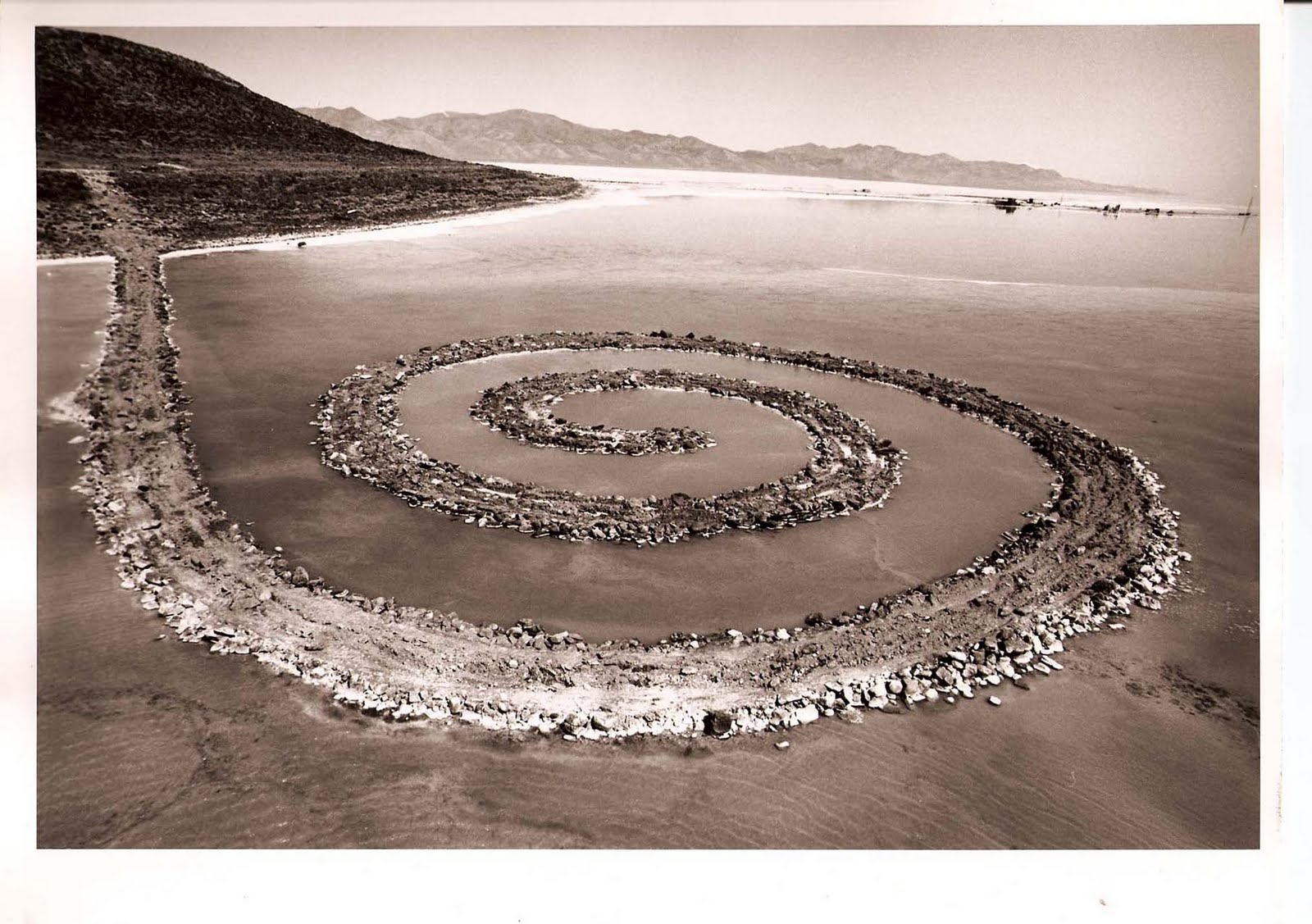
Spiral Jetty


Meditation helps to anchor someone in the present. A new study has found it also stops people from anticipating pain.
Brain scans revealed that the most advanced meditators were the least likely to anticipate pain induced by a laser device, which made the experience more bearable.
Lead researcher Dr Christopher Brown, said: 'Meditation is becoming increasingly popular as a way to treat chronic illness such as the pain caused by arthritis.
'Recently, a mental health charity called for meditation to be routinely available on the NHS to treat depression, which occurs in up to 50 per cent of people with chronic pain.
'However, scientists have only just started to look into how meditation might reduce the emotional impact of pain.'
The study, to be published in the journal Pain, found that participants who meditated showed unusual activity in the brain region known to be involved in controlling attention and thought processes when potential threats are perceived.
Dr Brown said: 'The results of the study confirm how we suspected meditation might affect the brain.
'Meditation trains the brain to be more present-focused and therefore to spend less time anticipating future negative events. This may be why meditation is effective at reducing the recurrence of depression, which makes chronic pain considerably worse.'
Dr Brown said the findings should encourage further research into how the brain is changed by meditation practice.
dailymail.co.uk

Wednesday, March 10, 2010

Kailash


North face of Mt Kailash


At the heart of the Sahasrara Chakra (the subtle centre at the crown of the head) is the abode of the aspect of the Self known in Hinduism as Lord Shiva. Though all the deities of the Hindu pantheon are believed to be aspects of the one Universal Self, Shri Shiva represents the unmanifested Self, which exists in a state of perpetual meditation, apparently withdrawn from the world. In Advaita philosophy, the distinction between Self and world is seen as illusory, and therefore the deities who look after different aspects of worldy existence are no less "spiritual" for their involvement with the world;  however, the ascetic deity, Lord Shiva, is often chosen by Hindus to represent the Self, because He is a pure essence at the heart of all things. He is considered to reside also in the heart Chakra. Lord Shiva is both remote, in the sense of being unaffected by phenomena, and the closest, because He resides in the heart. Because Self and world are one, meditation is not a withdrawal from the world, as many believe; it is a withdrawal from the mind's illusion of separateness. What better way to get a grip on reality than to become it.

The subtle centres are manifested at various locations on Earth. The Himalaya corresponds to the Sahasrara Chakra. Mt Kailash is located in a particularly remote and desolate region of the Tibetan plateau. Hindu texts describe it as being surrounded by seven layers of mountain ranges, rather like the heart of a lotus enfolded in layers of petals. Four great rivers of South Asia have their source near the mountain, and in yoga philosophy there are four subtle nadis, or spiritual channels, emerging from the Heart Chakra.
The Sanskrit word kailash means 'crystal', and the mountain does have a jewel-like appearance rising from the surrounding bare and arid terrain.