Showing posts with label Blake. Show all posts

Sunday, September 22, 2019

William Blake at the Tate


The Ancient of Days


From 11 September 2019 – 2 February 2020 the Tate Britain gallery in London, is showing over 300 works by William Blake; perhaps a once in a lifetime opportunity to appreciate his visionary genius on such a scale.

According to his biographer, Alexander Gilchrist, Blake's design The Ancient of Days was "a singular favourite". He made many versions of it, including one completed shortly before his death.

Saturday, December 21, 2013

A Joyful Christmas


William Blake, The Virgin and Child in Egypt, 1810, tempera on canvas.

Dear reader, wishing you a joyful, peaceful and safe Christmas.

Saturday, October 06, 2012

Imagination


“Most people have no imagination. If they could imagine the sufferings of others, they would not make them suffer so.”

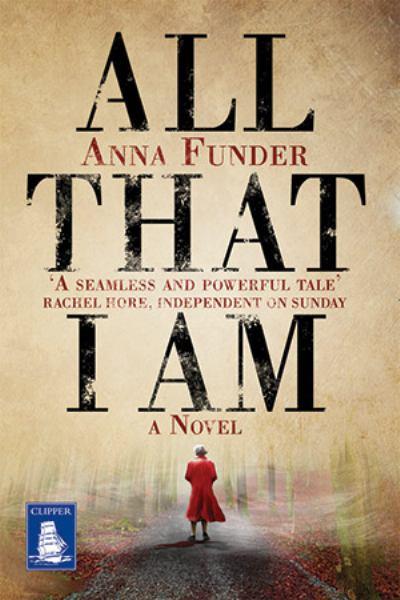
- Anna Funder, All That I Am.

I've just finished reading Anna Funder's brilliantly researched novel: All That I Am, which traces the lives of a group of anti-Hitler activists in exile who gradually become aware that they are not beyond the reach of Nazi cruelty. The book suggests that the sufferings imposed by Hitler's regime were due to a vast and tragic failure of the human imagination. The watercolours Hitler produced whilst attempting an art career are evidence of this.

The line I've quoted from Funder's novel led me to contemplate the art of imagining, and the act of putting oneself in the shoes of another person. 
With that in the back of my mind, I began searching for another book to read, I randomly picked up an autobiography of the poet William B Yeats, The Unicorn, W. B. Yeats' Search for Reality, by Virginia Moore. I dipped into the book, also at random, and by strange coincidence, on the page I opened, the word 'imagination' appeared several times. Moore was exploring William Blake's influence on the philosophy and work of Yeats, specifically Blake's championing of the quality of Imagination (he was fond of capitalising abstract nouns, probably to lend importance to, or to personify, the qualities they signify).
Blake saw Imagination not as a silly realm of fictive irrelevance, but as something vital to the very existence of human beings, a divine gift awakened by Jesus in particular. He saw the growing rationalism of the European mind as a force smothering the capacity for imagination.

From the perspective of yoga, with its system of chakras, as elucidated by Shri Mataji Nirmala Devi, imagination is a quality of the Agnya Chakra (or brow centre), opened on a cosmic level by Jesus. This is not to say that only Christians are capable of empathy; in fact Europe, the seat of Christendom, has seen some of the worst persecutions of the 'other' in the history of the world.

At the Sahasrara Chakra (or crown centre), which is the next step in the evolution of consciousness, the universal Self is realised. After Self-realisation, a person not only can imagine themselves in the situation of another person; they actually share Selfhood with that person, transcending the duality of 'me' and 'other' in a single cosmic Self. Imagination becomes Reality.

"The imagination is not a state: it is the human existence itself."
-William Blake

Friday, February 24, 2012

The Black Goddess


The Goddess Melancholia. An illustration by William Blake to a poem by Milton.
The word melancholia derives from the Greek melas, meaning 'dark' or 'black'. Here, perhaps, Blake is recalling the Goddess who, in India, is known as Shri Mahakali, the dark-bodied destroyer of evil.
Milton uses the word melancholy to signify a mood of poetic introspection, not a depressive state. Melancholia was one of the four "humours", or temperaments, of ancient Graeco-Roman medicine (the other three being: choleric, sanguin and phlegmatic).
According to Humourism, the well-being of the body and psyche depends on these four qualities being in balance.
The humours are akin to the concept of the gunas (energy channels) of yoga philosophy, and doshas of Ayurveda (traditional Indian medicine).


But hail thou Goddess, sage and holy,
Hail divinest Melancholy
Whose Saintly visage is too bright
To hit the Sense of human sight;
And therefore to our weaker view,
O'er laid with black, staid Wisdom's hue.
-Milton, Il Penseroso

Wednesday, March 09, 2011

Los


Los is a character from William Blake's mythological writings, and perhaps the figure Blake himself most identified with. Blake had a vision in which he met and became one with Los. 
Blake refers to him as the "eternal prophet", creator of the visionary city of Golgonooza. Los is regularly described as a smith, beating with his hammer on a forge, which is metaphorically connected to the beating of the human heart. The bellows of his forge are the human lungs. 
Los resembles the archangel Michael, who brings light to the gloomy regions of the subconscious, and the Ida nadi of yoga. 
In this illustration by Blake, Los is seen entering a tomb, carrying the sun in his right hand. Los is an anagram of sol, the sun.
In Greek folklore, St Michael also assumed the god Hermes' role as the psychopomp who leads souls to Hades after death, going where other angels would fear to tread. In this he is like the Hindu deity Shri Bhairava, an aspect of the ascetic god Shiva, who, in his asceticism and absorption in the  innermost Self, is completely unaffected by the world of the living and the dead, and can happily inhabit a graveyard without fear, aversion, and risk of possession. Shri Shiva/Bhairava presides over the heart chakra on the left side.

Friday, July 23, 2010

Praises of the Divine Mother by Four Incarnations of the Primordial Master, Shri Adi Guru Dattatreya


William Blake, The Mother Goddess whom he called Jerusalem, the Emanation from Albion (Shiva, the Self)


"The beginning of the universe is the Mother of all things."
-Master Lao Tse

"A son's paradise is found at the feet of his mother."
-Lord Muhammad

"The Primordial Mother came into being by Herself, mysteriously,
and She created three deities: one was the Creator, one the Sustainer, and one the Destroyer."
-Shri Guru Nanak (Founder of the Sikh religion), first lines of the Guru Granth Sahib

"Surrender to me and I will take care of you as a Mother takes care of a little child."
-Shri Shirdi Sai Nath

Thursday, August 27, 2009

At the Art Gallery of NSW


The Vision of God, The Book of Job
.
This engraving by William Blake is currently on display, along with several others from the Book of Job series, at the Art Gallery of New South Wales. The Universal Self connects to human beings through the Sahasrara Chakra at the crown of the head. From the perspective of ego and superego (conditionings), universal Selfhood is terrifying. Those who still cling to these two illusory institutions are seen cowering on the right side of the composition.

Monday, March 30, 2009

Emergence Reversal

Mental things alone are real;
what is called corporeal, nobody knows of its dwelling-place,
it is a fallacy and its existence an imposture.
Where is the existence, outside of mind or thought?
-William Blake

Western science is struggling to explain how mental states emerge from matter; and, more problematically, how a sense of self arises from matter.
Indian Advaita philosophers reverse the sequence of emergence and state that the self pre-exists everything and gives rise to mind from which the so-called material world emerges.
Blake's declaration that 'mental things alone are real' is also a reversal of the 'materialist' view. It is not necessarily Idealism; the world is real if recognised as Self, unreal if seen as other than Self (what Blake would call the Imagination).
To scientists, the self is imaginary (a simulation created by the material brain to motivate survival behaviours) To Blake the self is Imagination. (The universal Self is the Universal Imagination).

The question is: what exactly do we mean by 'matter', 'material', 'corporeal', 'real', and 'self''.
.
William Blake
.
"In Blake's conception, the soul is disintegrated and must reconcile every element of her being on the road back to Eternity. This is reminiscent of the ancient Egyptian myth of the dismemberment of Osiris in the beginning of time, and man's obligation in gathering together the dismembered parts in order to arrive once more at spiritual wholeness. To do this, 'man requires a new Selfhood continually,' as Blake expressed it: 'Self annihilation' was necessary."
-Madeline Clark