Showing posts with label Kundalini. Show all posts

Monday, May 13, 2024

The Aura


Roman Altar of Peace


In ancient Roman art, divine figures were often depicted with a veil forming an arch around them, as if billowing from a breeze emanating from their own body. This artistic device is called a velificatio, a term related to the word ‘veil’. The velificatio is also associated with rebirth and the vault of heaven.

The Kundalini energy is felt as an inner cool breeze, which not only refreshes and nourishes the subtle body, but generates a protective aura around it. Ancient Indian yoga texts use the term kosha ‘sheath’, and there is no close equivalent of the term ‘aura’.

In ancient Greek mythology, the Aurae were wind deities, who were often depicted with a velificatio, (the device spread via Greco-Buddhist Central Asia as far as Japan). 19th century spiritualists associated the velificatio with the subtle energy field they postulated, and started to use the word “aura” to refer to this emanation.

Shri Mataji Nirmala Devi has recommended the use of a bandhan, before and after meditation, as a protection. The bandhan is a movement of the right hand in an arch over the body, seven times, once for each of the auras generated by the seven chakras awakened by the Kundalini. It should be performed with the power of the attention, which is purified and strengthened by the Kundalini, the Cool Breeze.

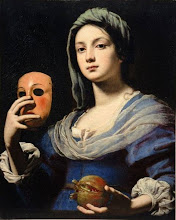
After Louis F Elle the Younger, portrait of a lady as Iris, the messenger goddess, source: Wikipedia


Tuesday, November 09, 2021

Wilderness Awakening

"one day Ross was in a slightly different part of the ocean, swimming on his own. He was on the west coast of Cape Town, where the water is even colder than his usual swimming spot. A huge school of fish swam up to him and circled him. "In marine protected areas, these fish are very calm around people because they're not hunted and they're actually incredibly friendly," Ross says. "I was just totally absorbed in this experience of these beautiful fish just swimming all around me; [I was] quite enchanted." Then the cold started to bite, and he returned to the beach. Sitting there in the sun to warm up, Ross says, "the strangest thing happened, [which] hasn't happened since". "I heard this voice in my head saying, 'Don't be scared'. "And then these waves of flames just came up through my body and straight out of the top of my head. And it was an awakening. I just knew that I was awake now for the first time."" Read full article here: https://www.abc.net.au/news/2021-11-09/ross-frylink-craig-foster-cold-water-swimming-in-south-africa/100584846

Tuesday, August 10, 2021

Chakra Scroll


Chakra scroll, Kashmir, early 19th century, Victoria and Albert Museum, London.

The top image represents the state above the Sahasrara Chakra called Pralaya, the dissolution of the universe before it is recreated. 
The sage Markandeya is shown worshipping Lord Vishnu in the form of an infant sucking his toe (symbolising the sweetness of surrendering to the Lotus Feet of the Divine). All that exists is The Self (Lord Vishnu), the ocean of existence (pure undifferentiated being), a banyan tree (representing Self-knowledge), and the sage (the witness).

Other images are of some of the chakras.
The bottom image is of the Kundalini, the coiled spiritual energy which connects us with the All-pervading Supreme Self.

Monday, December 23, 2019

Who Was The Buddha?


Who am I? What is the Self? This is the most fundamental of questions.

Buddhism has the concept of anatta (no self) which is usually interpreted to mean that souls and selves do not exist. However, The Buddha may have meant that individual, discrete selves are an illusion, but there is a singular, undivided Self that can be realised by one who has awakened from the dream of separateness (ego). This interpretation makes The Buddha's teaching compatible with the Indian philosophy of Advaita (non-duality).

Buddhists believe in reincarnation, which suggests the existence of souls. It may be that The Buddha saw souls as merely subtler forms of the gross body, and not something one should identify with. Perhaps this is the intention of the anatta doctrine. Centuries later, the sage Shri Shankaracharya wrote his Tad Niskala, which states that who you are is not the body, or the sheaths of the subtle body (soul), but Shiva (the Self of all that exists). Shri Mataji Nirmala Devi has said that Shri Shankaracharya was a reincarnation of The Buddha. Shankara encouraged devotion for the Adi Shakti, the feminine aspect of Shiva, the Universal Self, who manifests in each of us as the Kundalini. This is because, without Kundalini awakening, Self-realisation is not possible.

One might ask why The Buddha bothered to try to liberate people if he did not believe in souls, or selves. What would be the point of mere matter trying to enlighten mere matter? It's a good question. According to tradition, The Buddha did initially consider that perhaps teaching people about enlightenment would be a futile task. The answer may be that the Self, like the sun, must shine, no matter that there are clouds of ignorance and illusion. Suffering is due to the illusion of separateness, and this illusion should be dispelled, even if there are ultimately no 'others' who suffer.

The Buddhist scholar Alexander Wynne considers this issue, and also questions the emphasis on therapy in the contemporary offshoot of Buddhism, Mindfulness Meditation, in contrast to the Buddha's emphasis on Self-realisation as the main aim. In his article Who Was The Buddha?, he also tries to separate the mythical and historical figure of Gotama Buddha.

Read the article. here

Sunday, March 17, 2019

The Inner Breeze

For I, methought, while the sweet breath of heaven
Was blowing on my body, felt within
A correspondent breeze, that gently moved
— Wordsworth, The Prelude

Monday, February 15, 2016

Aquarius and Kundalini


"Lay a virtuous path. 
Teach goodness. 
Feel the Shakti flowing within you."
- Shri Mataji, Sankranti 2008

The Shakti, the manifest power of the all-pervading Divine Self, can be felt within as the Kundalini energy. 

The Kundalini corresponds to the astrological sign Aquarius. Aquarius is depicted by a figure pouring out water from a vessel (Kumbha in Sanskrit) but it also represents the release of spiritual energy.


Aquarius by Jake Baddeley
jakebaddeley.com

Sunday, December 14, 2014

The Inner Wheels


“There are beautiful wild forces within us. 
Let them turn the mills inside 
and fill sacks that feed even heaven.”
–St. Francis of Assisi 

Painting by Graham Brown

Sunday, August 03, 2014

The Inner River


When you do things from your soul, you feel a river moving in you, a joy.
-Rumi

Saturday, March 29, 2014

The Fountain


The Fountain
by St. John of the Cross

English version by Willis Barnstone

How well I know that flowing spring
in black of night.

The eternal fountain is unseen.
How well I know where she has been
in black of night.

I do not know her origin.
None. Yet in her all things begin
in black of night.

I know that nothing is so fair
and earth and firmament drink there
in black of night.

I know that none can wade inside
to find her bright bottomless tide
in black of night.

Her shining never has a blur;
I know that all light comes from her
in black of night.

I know her streams converge and swell
and nourish people, skies and hell
in black of night.

The stream whose birth is in this source
I know has a gigantic force
in black of night.

The stream from but these two proceeds
yet neither one, I know, precedes
in black of night.

The eternal fountain is unseen
in living bread that gives us being
in black of night.

She calls on all mankind to start
to drink her water, though in dark,
for black is night.

O living fountain that I crave,
in bread of life I see her flame
in black of night.


Ghent Altarpiece (detail), Jan van Eyck.


St. John of the Cross was a Spanish Christian mystic and poet of the 16th century.
The Eternal Fountain is an image of the Kundalini, the nourishing energy of the Holy Spirit, which John describes as the feminine aspect of the Divine.

Friday, December 14, 2012

Saul Williams

You will sit in darkness,
Swallowed by silence,
Until the angel of solitude
Ignites your spine.

-Saul Williams


Saul Stacey Williams (born February 29, 1972) is an American singer, musician, poet, writer, and actor.

Monday, May 28, 2012

Shakti Shekhinah Sakinah

In all the major religious traditions there is, or was, the concept of a feminine manifestation or Presence of God.

Hinduism
Shakti from Sanskrit shak – "to be able", meaning sacred force or empowerment – is the primordial cosmic energy and represents the dynamic forces that are thought to move through the entire universe in Hinduism. Shakti is the concept, or personification, of divine feminine creative power, sometimes referred to as 'The Great Divine Mother' in Hinduism. On the earthly plane, Shakti most actively manifests through female embodiment and creativity/fertility, though it is also present in males in its potential, unmanifest form.

Not only is the Shakti responsible for creation, it is also the agent of all change. Shakti is cosmic existence as well as liberation, its most significant form being the Kundalini Shakti, a mysterious psychospiritual force. Shakti exists in a state of svatantrya, dependence on no-one, being interdependent with the entire universe.

In Shaktism, Shakti is worshipped as the Supreme Being. However, in other Hindu traditions of Shaivism and Vaishnavism, Shakti embodies the active feminine energy Prakriti of Purusha, who is Vishnu in Vaishnavism or Shiva in Shaivism. Vishnu's female counterpart is called Lakshmi, with Parvati being the female half of Shiva.
-Source Wikipedia

Judaism
The feminine, creative, transformative Presence of God is called Shekhinah in Judaism. Shekhinah is associated with the Throne of God and the holiest precinct of the Temple. She is said to reside within the Ark of of the Covenant. As a Pillar of Cloud by day, and a Pillar of Fire by night, the Presence of God, the glorious Shekhinah, guided the people of Israel.


Shekhinah is a feminine noun in Hebrew and derives from a word meaning 'dwelling', while the Hindu Shakti means 'power'; however, it may not be a coincidence that the two words are similar, both referring to the feminine power or manifest presence of the Divine.
In the Talmud, Shekhinah is the power which caused the prophets to prophesy and King David to compose his Psalms. 

"The Shekhinah does not rest amidst laziness, nor amidst laughter, nor amidst lightheadedness, nor amidst idle conversation. Rather, it is amidst the joy associated with a mitzvah that the Shekhinah comes to rest upon people, as it is said: 'And now, bring me for a musician, and it happened that when the music played, God's hand rested upon him' [Elisha]"
-Talmud

There is a tradition of the Shekhinah as the Sabbath Bride. This recurrent theme is best known from the writings and songs of the legendary mystic of the 16th century, Rabbi Isaac Luria. Here is a quotation from the beginning of his famous shabbat hymn:

"I sing in hymns to enter the gates of the Field of holy apples. A new table we prepare for Her, a lovely candelabrum sheds its light upon us. Between right and left the Bride approaches, in holy jewels and festive garments..."

A paragraph in the Zohar starts: "One must prepare a comfortable seat with several cushions and embroidered covers, from all that is found in the house, like one who prepares a canopy for a bride. For the Shabbat is a queen and a bride. This is why the masters of the Mishna used to go out on the eve of Shabbat to receive her on the road, and used to say: 'Come, O bride, come, O bride!' And one must sing and rejoice at the table in her honor ... one must receive the Lady with many lighted candles, many enjoyments, beautiful clothes, and a house embellished with many fine appointments ..."


Christianity
In Christianity, the inspirational powers of the Shekhinah have been absorbed into the figure of the Holy Spirit.

Islam
The Islamic form of Shekhina, is Sakinah, and is associated with the quality of Divine Tranquility. Sakinah is mentioned several times in the Koran.

According to Ali, nephew of the Prophet Muhammad, "Sakinah is a sweet breeze, whose face is like the face of a human".
Ali's son Hussein, named one of his daughters Sakinah. The name has now become popular in Islamic countries.

Monday, February 06, 2012

The White Buffalo Calf Woman

Bronze statue of the White Buffalo Calf Woman, by Lee Leunig and Sherri Treeby

The White Buffalo Calf Woman is central to the spirituality and culture of the Lakota Sioux people. Lakota oral tradition relates that she appeared to them from the north as a beautiful young woman dressed in a brilliant white dress to give the tribe the sacred rituals which form the basis of their religion. She also took the form of a sacred white buffalo calf. When she left the tribe, she told them that she will come back in the future.


The medicine man Crow Dog explains her importance:
"This holy woman brought the sacred buffalo calf pipe to the Sioux. There could be no Indians without it. Before she came, people didn't know how to live. They knew nothing. The Buffalo Woman put her sacred mind into their minds."

Perhaps the sacred pipe (chanunpa) represents the tube-like shushumna nadi, the central channel of the subtle body, through which the Kundalini, passes like smoke. She explained to them that it represented the living breath of the Great Spirit.
The pipe, is the holiest ritual object of the Lakota, and was traditionally loaded with a mixture of sweet smelling herbs, roots, leaves and barks, of which tobacco was only one ingredient. The smoke was not inhaled, and the use of the pipe was reserved only for very special occasions. It was in no way habitual nicotine abuse.

Saturday, April 16, 2011

The First Mother


“This primordial nature is the breath of the Merciful God in his aspect as Lord. It flows throughout the universe and manifests Truth in all its parts. It is the first mother through which Truth manifests itself to itself and generates the universe”.

-Ibn al 'Arabi 

Ibn 'ArabÄ« (1165 – 1240) was an Andalusian Moorish Sufi mystic and philosopher.

Wednesday, December 08, 2010

The Spindle of Necessity

"After seven days in the meadow the souls and Er were required to travel further. After four days they reached a place where they could see a rainbow shaft of light brighter than any they had seen before. After another day's travel they reached it. This was the spindle of Necessity. Several women, including Lady Necessity, her daughters and the Sirens were present. The souls were then organized into rows and were each given a lottery token apart from Er."

From the Myth of Er, ascribed to Socrates by Plato.

This image of a rainbow spindle spinning out reincarnations, recalls the Kundalini, from Yoga tradition, a divine energy associated with the Goddess.


William Blake, illustration for the poem Jerusalem.

On the right a woman with the moon (feminine principle), spins a thread emerging from the crown of the head of a divine creator figure.
In yoga philosophy, the Kundalini shakti emerges through an aperture at the crown of the head, called the Brahmarandra (rent of Brahma).
Jerusalem is a symbol of the Sahasrara and the Eternal Self.

"Myths of weaving exist around the world as metaphors for creation."

"The spindle is often an axis mundi and its whirling whorls serve a cosmogonic function. Plato, for example, had a vision of the great goddess Ananke, "Necessity," spinning the universe; the sun, moon, and planets were her spindle's whorls; sirens sang through the webs of time and fate that she wove, and souls endlessly moved through the strands on their way to and from death and rebirth. Many goddesses are spinners and weavers: the Fates of ancient Greece; Athena, also of Greece; Neith of ancient Egypt; in Teutonic myth the Norns spin secret meanings into life."


The Norse goddess Frigg

Tuesday, November 02, 2010

The Sacred Feminine: Mary Magdalene

Mary Magdalene, Attributed to the Master of the Mansi Magdalene (Dutch)


The idea that Mary Magdalene was a fallen woman is a falsehood invented by medieval clerics who wanted to make her into an ideal of the penitent sinner, and so had to turn her life before meeting Christ into something sinful.
She was in fact an incarnation of the Purity of the Divine Feminine, which makes the slurs on her character an even greater wrong.


Mary Magdalene is referred to in early Christian writings as "the apostle to the apostles." In apocryphal texts, she is portrayed as a visionary and leader of the early movement, who was loved by Jesus more than the other disciples.


She is often depicted opening a vessel of ointment (which suggests the vessel of the Spirit, the Kundalini) She is also sometimes shown meditating in the wilderness with a skull in one hand, symbolising the renunciation of the body. These depictions are reminiscent of Indian paintings of Shri Mahakali, the renunciant aspect of the Goddess.


The name Mary occurs in 51 passages of the New Testament. There are several people named Mary in the Gospels. There also are several unnamed women who seem to share characteristics with Mary Magdalene. At different times in history, Mary Magdalene has been confused or misidentified with almost every woman in the four Gospels, except the mother of Jesus. "The idea that this Mary was 'the woman who was a sinner,' or that she was unchaste, is altogether groundless." There is no scriptural or historical evidence that Mary’s relationship with Jesus was anything other than that of a disciple to her teacher, definitely not a lover or wife. Although in the past she has suffered from a case of mistaken identity, Mary Magdalene was never reviled, demeaned or dismissed.
-Wikipedia
Here's a link to an apocryphal text mentioning three Marys in the circle of Christ: Sahaj-A-Z

Thursday, January 14, 2010

Who's Afraid of Virginia Woolf... & Kundalini Awakening


"to be rippling and streaming, to feel the glory run molten up the spine, down the limbs, making the eyes glow, burning, bright, and penetrate the buffeting waves of the wind."

Virginia Woolf probably had some form of bi-polar disorder, which ultimately led her to fill the pockets of her coat with stones and drown herself in a river. Nevertheless she was an exceptionally talented and influential writer. The above quote from one of her essays suggests that she may have experienced Kundalini awakening.
A few relatively modern writers, with very little understanding of what the Kundalini is (essentially the inborn force which connects the 'individual' with the universal Self) have suggested that it is potentially dangerous to try to awaken it, that it could lead to mental instability. The canonical texts of yoga, record the experiences of practitioners of yoga and Kundalini awakening in an unbroken tradition dating back thousands of years. There is no evidence in any of these texts that Kundalini awakening is anything but beneficial. What could be more healthy than a state in which the deluding institutions of ego and conditionings are dissolved? Problems can occur, however, if Kundalini yoga is mixed with a lifestyle or practices (eg certain Tantric techniques) which disturb the innocence of the Mooladhara Chakra, the support of the Kundalini. Without the support of innocence Kundalini awakening and Self-realisation cannot be sustained. As attested by the greatest saints and yogis of India, the Kundalini itself is a nurturing inner Mother, and would never do anything harmful.
Woolf's mental stability was shaken early on when she lost several people very dear to her at a very vulnerable period in her life. There was also the formidable intellectual constraint of her time, particularly for women, which must have been terrible for someone as creative and original as herself. Woolf's journals record that her moments of awakening, of transcending her ego, were extremely valuable and therapeutic. It appears that her final depression was due to an inability to reconnect to this life energy.

Tuesday, November 10, 2009

Kundalini

Kundalini is the Mother of the world, who illumines the self
and gives shade to the sprouted seed of the universe.
It is the embodiment of the formless Brahman,
the cask of Lord Shiva,
the main spring of the sacred syllable Om.

- Shri Jnaneshwara (Dnyaneshwara. also known as Jñanadeva) (1275-1296), Jnaneshwari (Dnyaneshwari)


William Blake, Beatrice Addressing Dante

Wednesday, October 08, 2008

Pentecost


The manifestation of tongues of flame on the Day of Pentecost, El Greco.
.
As indicated in most depictions of this scene, the presence of the Virgin Mary was central to the Pentecost Event as the Kundalini is a Maternal Divine Force. El Greco was a Self-realised artist, many years ahead of his time stylistically, who must have himself experienced the emergence of the Kundalini from the fontanel at the crown chakra. There is nothing hysterical about his interpretation, rather there is a sense of profound calmness and depth.

The Pentecostalist or Charismatic Churches have entered the limelight with the YouTube video of the involvement of Republican politician Sarah Palin in this radical sect. Pentecostalists are biblical literalists who place particular emphasis on the gifts received by the apostles on the Day of Pentecost from the Holy Spirit: which were said to include the ability to heal and to communicate in foreign tongues. This is how the event is described in the New Testament:

And when the day of Pentecost was fully come, they were all with one accord in one place. And suddenly there came a sound from heaven as of a rushing mighty wind, and it filled all the house where they were sitting. And there appeared unto them cloven tongues like as of fire, and it sat upon each of them. And they were all filled with the Holy Ghost, and began to speak with other tongues, as the Spirit gave them utterance.

The true meaning of the Day of Pentecost is the awakening of the healing Kundalini energy (the Divine Breath or Wind, described in the Koran as the Rukh), and awareness of the chakras in the inner, subtle body. In ancient yoga texts it is recorded that when the Kundalini rises and passes through the various chakras, it makes different subtle sounds: the syllables which make up the Sanskrit language. This is probably the unknown language that the apostles learned on the Day of Pentecost. The hysterical gibberish - 'speaking in tongues' - and collapsing into trance states, practised by pentecostalists has nothing to do with the Holy Spirit or the Kundalini; it is a dangerous psychological regression into the subconscious.

Kundalini awakening gives the yogi an understanding, not only of their own inner being but that of others. It confers peace and self-possession, not hysteria and hypnosis. It engenders tolerance and empathy for other peoples and cultures. In the realm of the subtle body, we are all built the same, and all speak the same language. In contrast to this, the Charismatic churches are characterised by hystrionic fundamentalism, literalism, exclusivism and intolerance.
.
See the YouTube Video of Sarah Palin - it's scary stuff:

Tuesday, September 09, 2008

The Healing Force


This is a photo of a massive gilded statue of Athena Parthenos (Parthenos means 'virgin' in Greek) in a full-scale replica of the Athenian Parthenon, built in the US (where else could they afford to do that?).

The serpent is a symbol of wisdom and healing, often associated with the Goddess in the ancient world, but the association between serpents and healing is found even in the patriarchal Judeo-Christian tradition. Moses healed the sick with a brazen serpent, here depicted by Michelangelo on the Sistine Chapel ceiling:


Shri Mataji Nirmala Devi has explained that the healing Kundalini energy, which ascends the spine during the experience of Self-realisation, is a serpent-like energy but not literally a serpent. The innate healing force of the body has been symbolised in humanity's collective unconscious by the serpent, because it lies dormant in the sacrum bone at the base of the spine as a coiled energy and, when awakened, moves in a serpentine manner. Also, snakes were once thought to have regenerative powers because they shed their skins. This echoes the rebirth experienced by the yogi through Kundalini awakening. These, however, are simply symbolic associations. Similarly, the Holy Spirit may have dove-like qualities but is not a bird.

The Kundalini is also considered to be a feminine divine force, a reflection of the Adi Shakti, the primordial creative manifestation of the supreme Self. Adi Shakti is the wife of Sadashiva, who is the embodiment of the Self in Hindu mythology. Hence the connection between the Goddess and the serpent.


The Caduceus - entwined serpents symbolising western medicine.

Read more about the realtionship between the Goddess, the serpent and healing here: http://en.wikipedia.org/wiki/Hygieia


Medicine, Gustav Klimt