Showing posts with label Agnya. Show all posts

Saturday, October 06, 2012

Imagination


“Most people have no imagination. If they could imagine the sufferings of others, they would not make them suffer so.”

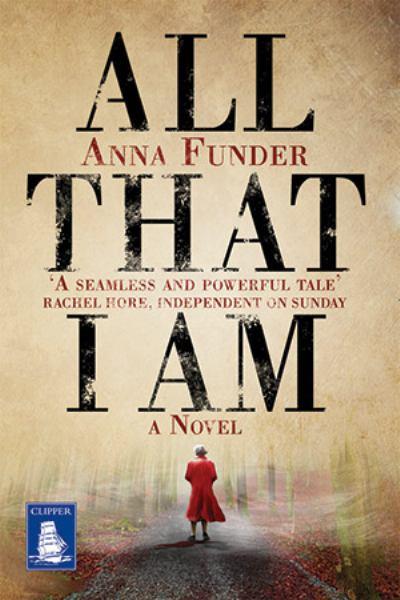
- Anna Funder, All That I Am.

I've just finished reading Anna Funder's brilliantly researched novel: All That I Am, which traces the lives of a group of anti-Hitler activists in exile who gradually become aware that they are not beyond the reach of Nazi cruelty. The book suggests that the sufferings imposed by Hitler's regime were due to a vast and tragic failure of the human imagination. The watercolours Hitler produced whilst attempting an art career are evidence of this.

The line I've quoted from Funder's novel led me to contemplate the art of imagining, and the act of putting oneself in the shoes of another person. 
With that in the back of my mind, I began searching for another book to read, I randomly picked up an autobiography of the poet William B Yeats, The Unicorn, W. B. Yeats' Search for Reality, by Virginia Moore. I dipped into the book, also at random, and by strange coincidence, on the page I opened, the word 'imagination' appeared several times. Moore was exploring William Blake's influence on the philosophy and work of Yeats, specifically Blake's championing of the quality of Imagination (he was fond of capitalising abstract nouns, probably to lend importance to, or to personify, the qualities they signify).
Blake saw Imagination not as a silly realm of fictive irrelevance, but as something vital to the very existence of human beings, a divine gift awakened by Jesus in particular. He saw the growing rationalism of the European mind as a force smothering the capacity for imagination.

From the perspective of yoga, with its system of chakras, as elucidated by Shri Mataji Nirmala Devi, imagination is a quality of the Agnya Chakra (or brow centre), opened on a cosmic level by Jesus. This is not to say that only Christians are capable of empathy; in fact Europe, the seat of Christendom, has seen some of the worst persecutions of the 'other' in the history of the world.

At the Sahasrara Chakra (or crown centre), which is the next step in the evolution of consciousness, the universal Self is realised. After Self-realisation, a person not only can imagine themselves in the situation of another person; they actually share Selfhood with that person, transcending the duality of 'me' and 'other' in a single cosmic Self. Imagination becomes Reality.

"The imagination is not a state: it is the human existence itself."
-William Blake

Saturday, December 26, 2009

Christmas

Ego sum Lux Mundi
"I am the Light of the World"
-Jesus

The nativity of Jesus did not occur in December. It is appropriate that The Light of the World incarnated at the time of Diwali, the Festival of Lights. The date of Diwali is set by the Hindu lunar calendar, which varies from year to year. It usually falls in October or November.

However, late December also has significance for this incarnation of light, as it is the time of the mid-winter solstice, after which the days begin to lengthen in the Northern Hemisphere. Early Christians admitted that they had no idea when Jesus was born. It is likely that they fixed the date of Christmas at the midwinter solstice because of it's symbolic association with the resurrection of the sun's light, a time of rejoicing for those living in chilly Northern climes.

Long ago, I used to baulk at the notion that early Christians would have taken pre-Christian symbolism into account, until I went to Europe and saw churches built on pagan sacred sites, and temples recycled as basillicas. Early Christians believed that certain pre-Christian, pagan prophets and sybils had been given revelations which supported Christianity. This is harder for present day Christians to accept. Many of them seeing such symbolism as a watering down or contamination, rather than a reinforcement, of their faith.

Light is the phase of vibration associated with the Agnya (Brow) Chakra, the subtle psycho-spiritual centre located in the optic area of the brain.


Michelangelo,
The Libyan Sybil,
Sistine Chapel.


Maybe we antipodeans should celebrate Christmas in our midwinter. This already happens in the Blue Mountains not far from Sydney. It sometimes snows there in winter, so there's even the chance of getting a traditional European white Christmas. The idea for "Christmas in July" blossomed in 1980 as snow began to fall on a cold winter's night at the Mountain Heritage Hotel, Katoomba. A small group of Irish visitors had come to The Blue Mountains to enjoy the clear winter climate that they were accustomed to back in Ireland - they commented that "Celebrating Christmas in Australia during the heat of summer just didn't feel quite the same". The host and owner of the Mountain Heritage offered to re-create for his Irish guests, a festive 'Winter Christmas' atmosphere with all the trimmings - frosted windows, Christmas feasts of turkey, hams, mince pies and steaming plum puddings, and choristers joining together singing the joys of the festive season. Plus, of course, a snowman. This tradition has become known as "Yulefest" and lives on throughout the Blue Mountains in the winter months of June, July and August.

Monday, October 12, 2009

Obey your Self

"Obey your Self and not your ego. And then you can order also others. Not only human beings, but you can even order the sun and the moon and all the winds and everything in the world. Everything you can control, everything with this Agnya."

-Shri Mataji Nirmala Devi, 1978, Agnya Chakra