Tuesday, September 25, 2007

Interior Origin

De-authentication. A more subtle mode of self-erosion also results from the increasing inundation of images, stories, and information. Consider those confirmatory moments of individual authorship, moments in which the sense of authentic action becomes most fully transparent. Given the Western tradition of individualism, these are typically moments in which we apprehend our actions as unique, in which we are not merely duplicating models, obeying orders, or following convention. Rather, in the innovative act we locate a guarantee of self as originative source, a creative agent. Yet, in a world in which technologies facilitate an enormous sophistication about cultural conventions, such moments become increasingly rare. How is it, for example, that a young couple, each of whom has been inundated for twenty-some years by romance narratives - on television and radio, in film, magazines, and books - can utter a sweet word of endearment without a haunting sense of cliché? Or in Umberto Eco's terms, how can a man who loves a cultivated woman say to her, "'I love you madly," when "he knows that she knows (and that she knows that he knows) that these words have already been written by Barbara Cartland?" In what sense can one stand out from the crowd in a singular display of moral fortitude, and not hear the voice of John Wayne, Gary Cooper, or Harrison Ford over one's shoulder?
Commodification of the self. These arguments are closely tied to a final, technology-induced shift in cultural understanding. Because the technologies of sociation enable information to be disseminated widely at low cost, popular entertainment has become a major industry. Critical to the entertainment industry are individual performers -individuals who, because they are entertaining, command a broad audience and vast remuneration. In effect, the "self" becomes available as a saleable commodity. Individual performers may take on new names, spouses, and lifestyles in order to increase their fame and income. As the entertainment industry expands, and as television channels become more numerous, the demand for "characters" becomes ever wider. Increasingly, the common person - owing to a peculiar passion, unique story, act of heroism or stupidity, or possession of inside information - becomes a potential candidate for fame and fortune. Consequently, there is a growing consciousness of the self as a commodity. Being true to one's self, possessing depth of character, and searching for one's identity all become old-fashioned phrases; they are nicely suited to earlier times but no longer profitable.
Each of these tendencies--toward polyvocality, plasticity, de-authentication and commodification of self--undermines the long-standing importance placed on the integral self, that core to which one's actions should be true. Although this erosion is lamentable in significant respects, it is also important to take note of growing criticism of the Western, traditional concept of individual selves.
On the conceptual level, the problem is not simply that the conception of a private mind carries with it all the thorny problems of epistemological dualism (subject vs. object, mind vs. body, minds knowing other minds), but also that the very idea of an independent decisionmaker proves uncompelling. How, it is asked, could mental deliberation take place except within the categories supplied by the culture? If we were to subtract the entire vocabulary of the culture from individual subjectivity, how could the individual form questions about justice, duty, rights, or moral good? In Michael Sandel's terms, "to imagine a person incapable of constitutive attachments ... is not to conceive an ideally free and rational agent, but to imagine a person wholly without character, without moral depth."
These conceptual problems are conjoined with a widespread ideological critique. Alexis de Tocqueville's observations of nineteenth-century U.S. life set the stage: "Individualism is a calm and considered feeling which disposes each citizen to isolate himself from the mass of his fellows ... he gladly leaves the greater society to look after himself." In recent decades these views have been echoed and amplified by many scholars. Christopher Lasch has traced the close association between individualist presumptions and cultural tendencies toward "me-first" narcissism; R. N. Bellah and his colleagues argue that modern individualism works against the possibility of committed relationships and dedication to community; for Edward Sampson, the presumption of a self-contained individual leads to social division and insensitivity to minority voices.
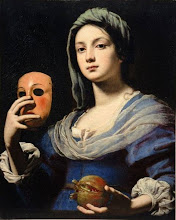
Ultimately, the concept of an interior origin of action defines the society in terms of unbreachable isolation. If what is most central to our existence is hidden from others, and vice versa, we are forever left with a sense of profound isolation, an inability to ever know what lies behind another's mask. With strong belief in an interior self, we inevitably create the Other to whom we shall forever remain alien.

-Kenneth J. Gergen

Saturday, September 22, 2007

There is only one mind


"There is only one light of the sun,
though it is intercepted by walls and mountains
and thousands of other objects.
There is only one common substance of the whole world,
though it is restrained in an infinite number
of different forms or bodies.
There is only one common soul,
though it is divided into innumerable
particular essences and natures.
There is only one mind,
though it seems to be divided..."

-Marcus Aurelius, Emperor of Rome.

Wednesday, September 19, 2007

A mythical being is indestructible

That which is not real cannot be destroyed.

A flying pig is invulnerable.
A fairytale cannot be contradicted.
A myth cannot be unmade,
only forgotten.

Rather than trying to destroy the ego,
one should witness it.

Sunday, September 09, 2007

"…we have become so desperate for the need to authenticate all aspects of our life as property that we cannot accept that stories are different, that they belong neither to our own experience nor to others…"
-Richard Flanagan

Tuesday, September 04, 2007

Religion and Morality

Intrinsic religiosity - belief in God and collective worship as an end in itself.
Extrinsic religiosity - religion and collective worship are seen as primarily social activities, often undertaken for personal gain.

A specialist in cultural evolution, Peter Richardson, and a human ecologist, Brian Paciotti, both from the University of California, used games to test groups of people for altruistic qualities such as generosity, trust and fairness. They found that there was a difference between secular and religious people. Religious people did give more; however, the team found that "only people with intrinsic or questing religiosity were more generous and trusting, and less likely to punish unfairly. Extrinsically religious people were actually less altruistic than the non-religious."

Paciotti believes that the findings support the idea that humans are hard-wired to be moral and cooperative (like other primates who live in groups), with religion serving to define the nature and scope of that moral behaviour and influence with whom we cooperate.

"We do not need religion to live moral lives, but without it morality might never have evolved." writes Helen Phillips.

-New Scientist, 15 September 2007.

.
Yoga philosophy also states that dharma (morality) is innate. In Ayurveda, Indian traditional medicine, adharma (immorality) is seen as a cause of disease because it goes against the dharma which regulates not only the community but the body itself. No amount of herbs and cleansing practices will cure a disease if the sick person continues to transgress their in-born moral structure.

Friday, August 31, 2007

The Unsteady Mind

"Little by little, he should come to rest,
With the intellect firmly held.
His mind having been established in the Self,
He should not think of anything.
Whenever the unsteady mind,
Moving to and fro, wanders away,
He should restrain it
And control it in the Self."

Bhagavad Gita 6.25–26. From Winthrop Sargeant, tr., The Bhagavad Gita (State University of New York Press: New York, 1994) 296–97.

One with the Universe

What did the Buddhist say at the hot dog stand?
- Make me one with the universe.

"Take the common hallucinogenic experience of losing our separate self, or becoming one with the universe. This may seem, to some, like mystical hogwash, but in fact it fits far better with a scientific understanding of the world than our normal dualist view. Most of us feel, most of the time, that we are some kind of separate self who inhabits our body like a driver in a car or a pilot in a plane.

Driverless truck in the movie Duel.

Throughout history many people have believed in a soul or a spirit. Yet science has long known that this cannot be so. There is just a brain that is made of the same stuff as the the world around it. We really are one with the universe.
This means that the psychedelic sense of self may actually be truer than the dualistic view. So although our normal state is better for surviving and reproducing, it may not always be best for understanding who and what we are..."
- Helen Phillips & Graham Lawton, New Scientist November 2004.


Self-inquiry reveals that there is a self, but it is not particulate or separate from world stuff. Some would call that a 'spirit' or 'soul' but these words suggest something different from the world - dualistic thinking.

Hallucinogenics may suspend the ego self temporarily and so give a sense of being one with the universe;
however, they shift awareness into the superego, a state as far from reality as the ego.

Sunday, August 26, 2007

Desires

"How can people know when their desires are authentically their own, conditioned as they are by identity, habit, culture, and all of what Haskell calls 'the numb, repetitive past'?"
TLS June 2, 06

Thursday, August 23, 2007

To have or to be?

"The fear of death comes
from the idea of owning life,
of experiencing it as a possession."

"The mode of being exists
only in the here and now...
the mode of having exists only in time:
past, present and future.
In the having mode we are bound
to what we have amassed in the past:
money, land, fame, social status,
knowledge, children, memories."

-Erich Fromm
Fromm was a German-Jewish-American social psychologist whose brand of socialism rejected both Western capitalism and Soviet communism, which he saw as dehumanizing and bureaucratic social structures that resulted in a virtually universal modern phenomenon of alienation. He became one of the founders of socialist humanism, promoting the early writings of Karl Marx

[the having mode also drags awareness
into the not-yet-existing future
in which we aspire to have these things.
By dwelling in the not-yet-existent
we become ourselves non-existent.
We defer the being we could enjoy
in the here and now.]
-Jeronimus

Tuesday, August 21, 2007

Personhood


People generally believe that without ownership of mind a person would cease to be a person, but personhood is not destroyed when the acquisitive ego is dispelled. Analogously, space is not destroyed when a pot is smashed.


According to the writers of the Upanishads and other Sanskrit texts, the universe does not just feature personhood, but it is a person, called Purusa or Purusha (the words 'person' and 'purusa' are very similar. I wonder if they have a common Proto Indo-European origin). In the Svetasvatara Upanisad, Purusa is described as being "everything in existence, everything that was and everything that will be". The human mind has forgotten that this is its true source of personhood.


The Impersonal or Transpersonal
Charles Upton has commented that, to the Western mind, the idea of an Absolute Self beyond individual 'persons' is difficult to accept. The term 'impersonal' denotes something inferior to personhood. He prefers to describe the Absolute Self as 'transpersonal'.
"God is indeed a Person, but if we say He is only personal, we are in danger of implying that He is no more than we conceive Him to be, of imprisoning Him on our human level of understanding, of denying that He opens out 'behind', onto the Infinite. But of course we do the same thing in our habitual ways of seeing other people, and ourselves; we treat others as if they were no more than our ideas of them, and ourselves as if we were limited to our own shifting self-images. We forget that all persons are, precisely, personal faces of the Transpersonal Absolute: if, like God, we were not also more than persons, we would not be persons at all."
- Charles Upton, Parabola, Summer 2008

Sunday, August 19, 2007

Self-ownership

Cohen states that if “ownership requires separability of what owns from what is owned, then self-ownership is impossible”. His interpretation of the “self” invoked by the thesis of self-ownership is that the term is reflexive; the “self” signifies that “what owns and what is owned are one and the same, namely, the whole person”. Thus to say that “A enjoys self-ownership is just to say that A owns A”. There is no “deeply inner thing” that is owned. If “self-ownership” refers to a whole person in the sense that there is no distinction between the owner and his property, so that what is owned cannot be separated from the owner, it follows that the property cannot be alienated.

Friday, August 17, 2007

The Amesha Spentas


Zoroaster, detail, The School of Athens by Raphael

Zoroaster, or Zarathustra, the prophet and poet of ancient Persia, is now almost universally accepted by Iranists to have lived in the 9th/10th century BCE. His message of a single beneficent God called Ahura Mazda, probably influenced Judaism, and echoes the idea of a single, otherless Self, found in the Upanishads of India.
The monotheistic teachers have striven to draw the attention of humanity to the central truth of existence - that there is only one Self. They recognised that it was difficult for people to grasp the concept that the gods they worshipped were aspects of a single Self within. Multiplicity was distracting people from the path of realising this single Self.
However, Zoroaster's One God is not a dull monolith, but has different aspects responsible for the unfolding of different areas of Manifestation. He called them the Amesha Spentas (beneficent immortals) and they are comparable to the archangels of Creation in Judaism. In common with the system of seven Chakras, each with a presiding deity, found in ancient Indian Yoga philosophy, there are seven Amesha Spentas (six emanations plus their origin - Ahura Mazda - making a heptad)
There are similarities between the qualities of the Amesha Spentas and those of the deities of the Chakras. In praise of these aspects of the Divine, Zarathustra wrote a collection of hymns called the Gathas, an old Persian word closely related to the Sanskrit 'gita', meaning 'song'.

The qualities of the Chakras according to Sahaja Yoga are:

1)Mooladhara (Base) Chakra - earth, innocence, wisdom
2)Swadisthana (Pelvic) Chakra - fire, creativity
3)Nabhi (Navel) Chakra - water, sustenance, balance, prosperity
4)Anahata (Heart) Chakra - air, love, security.
5)Visshuddhi (Throat) Chakra, - ether/sky, communication
6)Agnya (Brow) Chakra - light, forgiveness, mind.
7)Sahasrara (Crown) Chakra - integration, union.

The Zoroastrian Amesha Spentas are:
1)Ameretat ("not dying") Rules over Plants. Personification of immortality.

2)Asha vahishta ("excellent order") Fire element. Personification of the 'best truth' and protector of the physical and moral order on earth.

3)Haurvatat ("wholeness"). Water element. Personification of perfection. She brings prosperity and health.

4)Aramaiti ("devotion") Earth element. Personification of holy devotion.

5)Khshathra vairya ("desirable dominion") sky/metal. A warrior.

6)Vohu Manah ("good mind") Personification of wisdom.

7)Ahura Mazda The Supreme Self

"In the context of the Zoroastrian view of creation, the group of the Amesha Spenta is extended to include Ahura Mazda, together with (or represented by) Spenta Mainyu. However, in most scholastic texts, an unqualified referral to the "Amesha Spenta" is usually understood to include only great six. In Yasna 44.7, 31.3, and 51.7, Ahura Mazda's Spenta Mainyu is the instrument or "active principle" of the act of creation. It is also through this 'Bounteous Force', 'Creative Emanation' or 'Holy Spirit' that Ahura Mazda is immanent in humankind (Yasna 33.6), and how the Creator interacts with the world (Yasna 43.6).
The doctrine also has a physical dimension, in that each of the heptad is linked to one of the seven creations, which in ancient philosophy were the foundation of the universe. These physical associations are only alluded to in the Gathas, and then so subtly that they are usually lost in translation.
A systematic association is only present in later middle Persian texts, where each of the seven is listed with its 'special domain':"

Tuesday, August 14, 2007

Free Will


Using electroencephalograms scientists can measure the brain activity that occurs milliseconds before a person 'spontaneously' decides to act of their 'own free will'. They can predict when a person is going to have an urge to act, before the person is conscious of that urge.

"It is our brains that cause our actions. Our minds just come along for the ride".

"our most important way of classifying the world is into people (or agents) and things. If I don't have free will then I am not a person. But for scientists to prove that free will is not an illusion, they will have to solve the hard problem of exactly how a desire in the mental realm can cross into the physical world and cause something to happen. To date they are rather a long way from doing this."
-Chris Frith,
New Scientist, 11 August 2007

The brain is real, not the illusory ego that claims to have free will to act. If there is free will, it belongs to the universe, it is not the property of individual egos. This does not imply that we live in an amoral universe.
Like free will and spontaneity, morality, or Dharma, is a property of the universe, not a property of the individual mind.

Monday, August 13, 2007

Superimposition of the unreal onto the Real

It is a matter not requiring any proof that the object and the subject whose respective spheres are the notion of the 'Thou' (the Non-Ego) and the 'Ego,' and which are opposed to each other as much as darkness and light are, cannot be identified. All the less can their respective attributes be identified. Hence it follows that it is wrong to superimpose upon the subject - whose Self is intelligence, and which has for its sphere the notion of the Ego - the object whose sphere is the notion of the Non-Ego, and the attributes of the object, and vice versa to superimpose the subject and the attributes of the subject on the object. In spite of this it is on the part of man a natural procedure - which has its cause in wrong knowledge - not to distinguish the two entities (object and subject) and their respective attributes, although they are absolutely distinct, but to superimpose upon each the characteristic nature and the attributes of the other, and thus, coupling the Real and the Unreal, to make use of expressions such as 'That am I,' 'That is mine.' - But what have we to understand by the term 'superimposition?' - The apparent presentation, in the form of remembrance, to consciousness of something previously observed, in some other thing.
Shri Adi Sankaracharya,
Introduction to the Brahma Sutras
Ādi Śankarācārya ("the first Shankara in his lineage") was the first philosopher to consolidate the doctrine of Advaita Vedanta, a sub-school of Vedanta. His teachings are based on the unity of the soul and Brahman, in which Brahman is viewed as without attributes. In the Smārta tradition, Adi Shankara is regarded as an incarnation of Shiva. There is debate over the date of his birth; some place it as early as the 9th century CE.

Sunday, August 12, 2007

Trimurthi Elephanta Restoration


Here is a digital restoration I made from
a photograph of the damaged sculpture of Trimurthy
(Triple aspect of Supreme Being -
Creator, Sustainer and Destroyer)
at Elephanta Island near Mumbai.

The original looks like this:

The Song of Ribhu

Abide as That, on realizing which to be oneself, there is nothing else to be known, everything becomes already known and every purpose accomplished - and be always happy, without the least trace of thought.

Abide as That which is attained easily when one is convinced that one is not different from the Supreme Absolute, That which results, when that conviction becomes firm, in the experience of the Supreme Bliss of the Real, That which produces a sense of incomparable and complete satisfaction when the mind is absorbed in It - and be always happy, without the least trace of thought.

Abide as That which leads to the complete cessation of misery when the mind is absorbed in It, and the extinction of all ideas of “I”, “you” and “another,” and the disappearance of all differences - and be always happy, without the least trace of thought.

-The Song of Ribhu