Tuesday, June 22, 2010

Self-forgetting

Shri SitaRama Enthroned, Gouache on Japanese paper.


Lord Rama was an Incarnation of the Supreme Self who deliberately forgot His divine identity in order to become a human being (an ideal one).
After performing intense and prolonged austerities, the demon Ravana had won a boon from the god Brahma (or Shiva?), and asked that he become invulnerable from death at the hands of any god or fellow demon. Contemptuous of apparently frail human beings, he neglected to ask for immunity from them, thus creating a loophole which allowed Shri Rama (the all-powerful Lord Vishnu in human form) to kill him and free the world from oppression.

The Dishonesty of Ego

In Western culture, ego is often thought of as 'healthy', or at worst a necessary evil. But constructing an artificial sense of self based on the lie of separateness, can have catastrophic consequences not only for the person but for entire societies. Dorothy Rowe writes:
Can you bear to remember that time in your life when you were going along feeling secure and thinking, "This is me, this is my world, that was my past, this will be my future," when suddenly you found that you had made a major error of judgement? When you realised that many of the ideas underpinning your whole sense of being a person - that sense of "I", "me", "myself" - had been invalidated by events?
Have you ever had the sensation of falling through infinite space, shattering, crumbling, of being about to disappear like a raindrop into the ocean? Perhaps you knew that what was falling apart was not your sense of self but some of your ideas. You knew that you now had to go through a period of uncertainty until new ideas emerged. But if you did not know this, you would have been utterly terrified, so terrified that you would do anything never to go through such an experience again.
Psychiatrists and psychologists have either ignored this experience, maximised its significance as a full-scale "breakdown", or minimised it as a "panic disorder". Yet this feeling of falling apart is an essential part of our lives and of most of our narratives. In The Wizard of Oz, for example, Dorothy and her companions emerge wiser and strong from the invalidation of their idea that the wizard could solve their problems, while paradoxically Othello is destroyed by the invalidation of his belief that his wife Desdemona had been unfaithful.
We first experience the terror of being invalidated when we are small children, but by the time we are 3 or 4 we have learned a way of avoiding it: we have learned how to lie. From then on, whenever we glimpse the faintest possibility that our "selves" might be threatened with annihilation, we lie.
First of all, we lie to ourselves. Why? Because we fear that we do not have the strength and courage to face the truth of our situation. We even lie about lying, preferring to call our lies anything but a lie. We say: "He's in denial" or "She's being economical with the truth".
All lies have networks of consequences we did not expect or intend. The lies we tell may well protect us and our personal - or collective - sense of self in the short term, but in the long term and in a linked-up, complex world, the consequences can be truly disastrous. After all, when we lie to ourselves and to others, we multiply a thousandfold the inherent difficulties we have trying to determine what is actually going on inside us and around us.
-New Scientist, 21 June 2010
Dorothy Rowe is an Australian psychologist and emeritus associate of the Royal College of Psychiatrists.
Read the full article

Tuesday, June 15, 2010

The Self is infinite

The Self appears to be finite because of ignorance.
When ignorance is destroyed, the Self,
which does not admit of any multiplicity,
reveals itself by itself:
just as the sun reveals itself
when it evaporates the clouds covering it.

-Shri Adi Shankaracharya, Atmabodha

Thursday, June 03, 2010

Research on Meditation


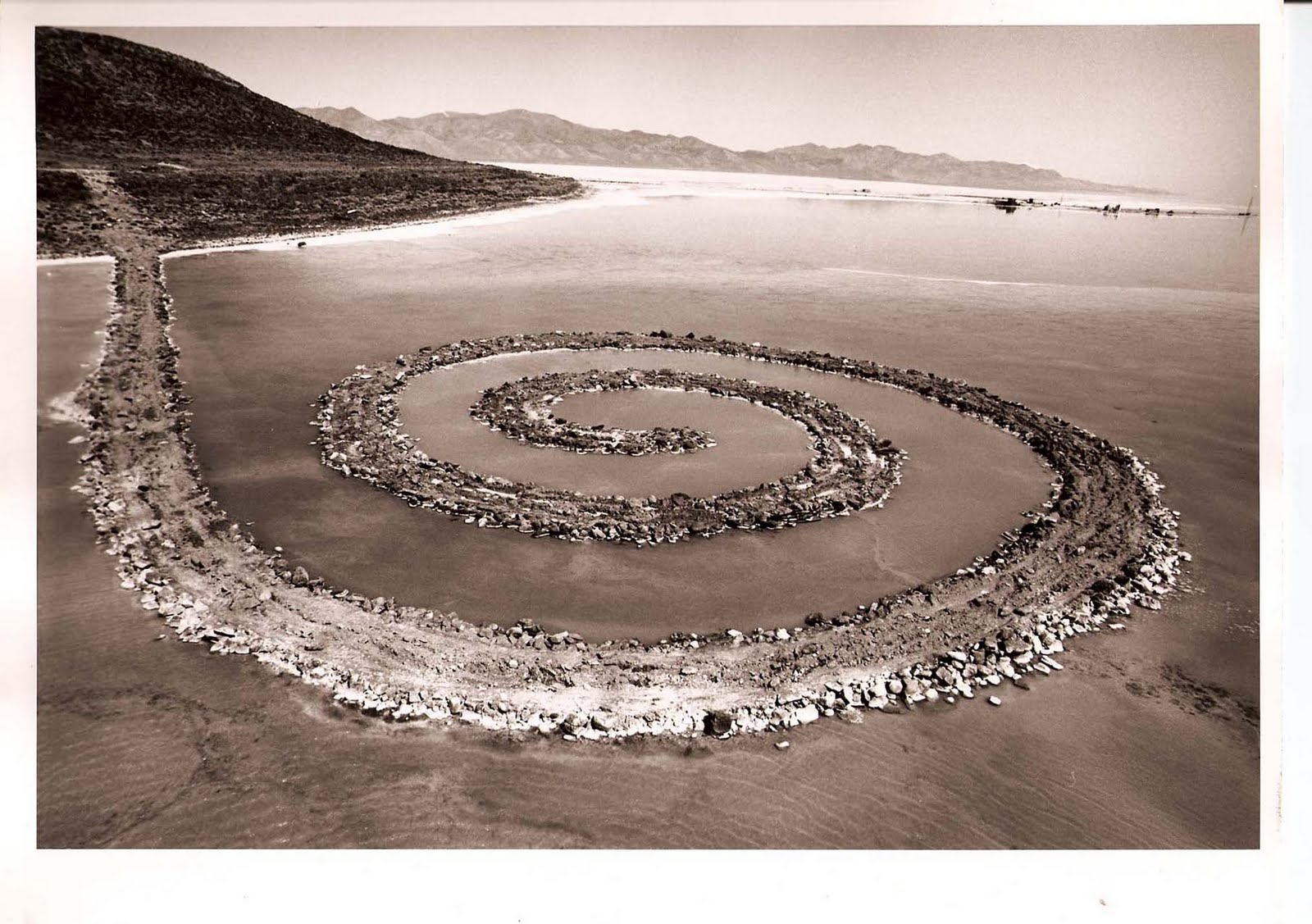
Spiral Jetty


Meditation helps to anchor someone in the present. A new study has found it also stops people from anticipating pain.
Brain scans revealed that the most advanced meditators were the least likely to anticipate pain induced by a laser device, which made the experience more bearable.
Lead researcher Dr Christopher Brown, said: 'Meditation is becoming increasingly popular as a way to treat chronic illness such as the pain caused by arthritis.
'Recently, a mental health charity called for meditation to be routinely available on the NHS to treat depression, which occurs in up to 50 per cent of people with chronic pain.
'However, scientists have only just started to look into how meditation might reduce the emotional impact of pain.'
The study, to be published in the journal Pain, found that participants who meditated showed unusual activity in the brain region known to be involved in controlling attention and thought processes when potential threats are perceived.
Dr Brown said: 'The results of the study confirm how we suspected meditation might affect the brain.
'Meditation trains the brain to be more present-focused and therefore to spend less time anticipating future negative events. This may be why meditation is effective at reducing the recurrence of depression, which makes chronic pain considerably worse.'
Dr Brown said the findings should encourage further research into how the brain is changed by meditation practice.
dailymail.co.uk

Friday, May 14, 2010

Racial Purity

In the latest New Scientist: A long-awaited rough draft of the Neanderthal genome has proved what was long-suspected: Homo sapiens interbred with Neanderthals. Our own DNA contains clear evidence of this. The genome of humans today is roughly 1-4% Neanderthal, a species not generally considered "human". This holds true for all non-Africans. It turns out that Africans are actually pure homo sapiens.
White supremacists should rethink their ideas about Africans being less "human" or less "racially pure" than themselves. More likely they will attempt to reinvent Neanderthals as some kind of superior species, despite the fact that they went out of evolution.

Saturday, May 08, 2010

Inhere as the Self


"Therefore become dispassionate
and inhere as the Self.
Such inherence is spontaneous and effortless.
It is realised after thoughts are eliminated
and investigation ceases.
Return to your state after you break off from it,
and then you will know all,
and the significance of its being knowable
and unknowable at the same time.
Thus realising the unknowable,
one abides in immortality
for ever and ever.

-Tripura Rahasa, (The Mystery Beyond the Three States of Consciousness,
or The Secret of the Supreme Goddess)
Attributed to Shri Adi Guru Dattatreya

Wednesday, May 05, 2010

40th Sahasrara Day

The Celestial Rose, Illustration to Dante's Paradiso

Today is the 40th anniversary of the opening of the Sahasrara Chakra of the Virata, by Shri Mataji Nirmala Devi.

"(Sanskrit: सहस्रार, Sahasrāra) is the seventh primary chakra according to Hindu tradition. Often referred as thousand-petaled lotus, it is said to be the most subtle chakra in the system, relating to pure consciousness, and it is from this chakra that all the other chakras emanate. When a yogi is able to raise his or her kundalini, energy of consciousness, up to this point, the state of Samādhi, or union with God is attained."

- Wikipedia

Thursday, April 29, 2010

The Goddess and the Volcano

Archangel Michael, Peruvian Icon, Oil on Canvas


In many traditions around the world, volcanoes are considered to be manifestations of the Goddess, particularly in Her terrific or destructive aspect.
In Hawaii She is known as the indomitable Pele. In Amerindian mythology Mt St Helens is the form taken by the maiden Luwit, and Mt Fuji in Japan is presided over by the goddess Konohana Sakuya Hime. 
The blood-like lava flows, the black smoke, the grey ash reminiscent of the cremation ground, the lightning and destructive fury, are all suggestive of the Hindu goddess Shri Mahakali, the terrifying destroyer of negative forces.

This painting depicts not the Goddess Herself but the Archangel Michael, who presides, with Shri Mahakali, over the left, lunar channel of the Subtle Body. This channel (also known as the Ida Nadi) has the universal quality of Tamas, the cold, dark energy of inertia, which acts as a brake to the overactivity of the solar channel of Rajas. The Icelandic volcano certainly applied a braking force to European air travel.

People who doubt that human activity has a significant effect on global warming often point to the huge amounts of the greenhouse gas carbon dioxide emitted during volcanic eruptions. However, volcanoes also emit ash and sulphur, which can remain suspended in the atmosphere for several years, partially shielding the planet from solar radiation. This cooling effect is known as the haze effect. Volcanic eruptions enhance the haze effect to a greater extent than the greenhouse effect. Observational evidence shows a clear correlation between historic eruptions and subsequent years of cold climate conditions. Volcanoes have a net cooling effect on global climate.


Monday, April 12, 2010

Another Good Letter to NS

From Maggie Hamand:
"As someone with a first degree in biochemistry and an MA in theology. I am always fascinated by debates about religion and science. I was dismayed, however, to read [in New Scientist magazine] that belief in God is equated with belief in "supernatural beings". In Christian theology God is not seen as an object of our consciousness, and therefore cannot be described as a "being" or as a "thing". God is held to be both beyond being (transcendent) and being itself (immanent). As far as I am aware Judaism, Islam and indeed Buddhism and Hinduism have similar doctrines. It is human to constantly reify things which are abstract - as scientists do when talking about particles and black holes - or which are divine: but this should be resisted if we are to truly understand things."
London, UK.

Similarly, the Self is not a thing. Reification (also known as hypostatisation, concretism, or the fallacy of misplaced concreteness) is a fallacy of ambiguity, when an abstraction (abstract belief or hypothetical construct) is treated as if it were a concrete, real event, or physical entity. In other words, it is the error of treating as a "real thing" something which is not a real thing, but merely an idea. The habit of thinking about abstractions in terms of concrete objects is probably an inborn tendency in human beings. The word 'real' is quite vague, philosophers can't even agree on what the word 'existence' means. To say that God/Self should not be reified does not necessarily mean It does not 'exist'.

The Collective Self

"The idea that consciousness is the product of interaction between different areas of the brain may have begun with Bernard Baars in 1983, but German philosopher Jurgen Habermans (born in 1929) has long argued that knowledge arises from interaction between people. George Herbert Mead argued that mind itself arises from such interaction, rather than the other way around. It is far from surprising that the social and individual processes of the mind would mimic, or perhaps mirror, each other, and comes as no surprise to those of us who question the assumption that each of us has, or is, a fundamental single self from which all else proceeds."
-Steve Wilson, letter published in New Scientist


The conscious brain evolved at the level of the Visshuddhi Chakra, which is characterised by the quality of collectivity, the interaction, or play, between variegated parts of a whole. According to Advaita philosophy, the Self is singular, but also has innumerable aspects which can interact through the principle of collectivity. Many scientists are tending towards the idea that individual 'selves' are fictitious - a simulation, or an illusion. However, to answer what has been called the 'hard problem' of consciousness - how subjective experience arises from the physical brain - we will always need a single universal subject, or Self.


3D chess game from Star Trek. Consciousness arises through interaction and play.

Sunday, March 14, 2010

The Tyranny of the Discontinuous Mind


"The boundaries of objects are vague - and that goes for us too... Describing the world in terms of discrete objects is a useful fiction."

- Kees van Deemter, a computational linguist at the University of Aberdeen, UK, and author of Not Exactly: In praise of vagueness


Richard Dawkins calls this tendency to think in discrete categories "the tyranny of the discontinuous mind".

Thursday, March 11, 2010

Avadhuta Gita

All that exists in this world of forms
Is nothing but the Self, and the Self alone.
How, then, shall the Infinite worship Itself?
Shiva is one undivided Whole!

-Avadhuta Gita (The Song of the Renunciant)
Probably 9th or 10th century
Traditionally ascribed to Shri Dattatreya


Wednesday, March 10, 2010

Kailash


North face of Mt Kailash


At the heart of the Sahasrara Chakra (the subtle centre at the crown of the head) is the abode of the aspect of the Self known in Hinduism as Lord Shiva. Though all the deities of the Hindu pantheon are believed to be aspects of the one Universal Self, Shri Shiva represents the unmanifested Self, which exists in a state of perpetual meditation, apparently withdrawn from the world. In Advaita philosophy, the distinction between Self and world is seen as illusory, and therefore the deities who look after different aspects of worldy existence are no less "spiritual" for their involvement with the world;  however, the ascetic deity, Lord Shiva, is often chosen by Hindus to represent the Self, because He is a pure essence at the heart of all things. He is considered to reside also in the heart Chakra. Lord Shiva is both remote, in the sense of being unaffected by phenomena, and the closest, because He resides in the heart. Because Self and world are one, meditation is not a withdrawal from the world, as many believe; it is a withdrawal from the mind's illusion of separateness. What better way to get a grip on reality than to become it.

The subtle centres are manifested at various locations on Earth. The Himalaya corresponds to the Sahasrara Chakra. Mt Kailash is located in a particularly remote and desolate region of the Tibetan plateau. Hindu texts describe it as being surrounded by seven layers of mountain ranges, rather like the heart of a lotus enfolded in layers of petals. Four great rivers of South Asia have their source near the mountain, and in yoga philosophy there are four subtle nadis, or spiritual channels, emerging from the Heart Chakra.
The Sanskrit word kailash means 'crystal', and the mountain does have a jewel-like appearance rising from the surrounding bare and arid terrain.

Tuesday, February 16, 2010

Maya


This is Maya (Illusion).
She has been intentionally created.
Without her, the attention would not have developed.
You should not be afraid of Maya
and should recognize Her
so that She will illuminate your path.
A cloud hides the sun and also makes it seen.
In the same way, once the Maya is identified,
she moves aside and the sun is seen.
The sun is always there,
but what is the purpose of the cloud?
Because of the cloud, you have an urge to see the sun,
which shines for a moment and again hides somewhere.

-HH Shri Mataji Nirmala Devi


From the experience of bliss for a long time, there arose in the Supreme Self a certain state like deep sleep. From that state Maya (the illusive power of the Supreme Self) was born, just as a dream arises in sleep. This Maya is without the characteristics of (or different from) Reality or unreality, without beginning, and dependent on the Reality that is the Supreme Self. She, who is of the form of the Three Gunas (the qualities or energies of Nature), brings forth the Universe with all its animate and inanimate things.
-Shri Shankaracharya (probably 788–820 CE)

Tuesday, February 02, 2010

Self as Reality

Persian Women Gathered Around a Samovar,
19th Century.

Your name, village, country, horoscope, forecasts, many such things get attached to you, or others attach them to you. Once the Brahmarandhra is closed, many types of illusory ideas become part of your mind….
Only that attention which progresses, renouncing all that is unreal, breaks all known and unknown bindings becomes verily the Self. Atma (the Spirit) is never disturbed or destroyed.
- HH Shri Mataji Nirmala Devi

Thursday, January 14, 2010

Who's Afraid of Virginia Woolf... & Kundalini Awakening


"to be rippling and streaming, to feel the glory run molten up the spine, down the limbs, making the eyes glow, burning, bright, and penetrate the buffeting waves of the wind."

Virginia Woolf probably had some form of bi-polar disorder, which ultimately led her to fill the pockets of her coat with stones and drown herself in a river. Nevertheless she was an exceptionally talented and influential writer. The above quote from one of her essays suggests that she may have experienced Kundalini awakening.
A few relatively modern writers, with very little understanding of what the Kundalini is (essentially the inborn force which connects the 'individual' with the universal Self) have suggested that it is potentially dangerous to try to awaken it, that it could lead to mental instability. The canonical texts of yoga, record the experiences of practitioners of yoga and Kundalini awakening in an unbroken tradition dating back thousands of years. There is no evidence in any of these texts that Kundalini awakening is anything but beneficial. What could be more healthy than a state in which the deluding institutions of ego and conditionings are dissolved? Problems can occur, however, if Kundalini yoga is mixed with a lifestyle or practices (eg certain Tantric techniques) which disturb the innocence of the Mooladhara Chakra, the support of the Kundalini. Without the support of innocence Kundalini awakening and Self-realisation cannot be sustained. As attested by the greatest saints and yogis of India, the Kundalini itself is a nurturing inner Mother, and would never do anything harmful.
Woolf's mental stability was shaken early on when she lost several people very dear to her at a very vulnerable period in her life. There was also the formidable intellectual constraint of her time, particularly for women, which must have been terrible for someone as creative and original as herself. Woolf's journals record that her moments of awakening, of transcending her ego, were extremely valuable and therapeutic. It appears that her final depression was due to an inability to reconnect to this life energy.