From the Diamond Sutra:
Then the Lord Buddha addressed the assembley...
Though the sentient beings thus to be delivered by me are innumerable and without limit yet, in reality, there are no sentient beings to be delivered. And why, Subhuti? Because, should there exist in the minds of Bodhisattva-Mahasattvas such arbitrary conceptions of phenomena as the existence of one's own ego-selfness. The ego-selfness of another, self-ness as divided into an infinite number of living and dying beings, or selfness as unified into one Universal Self existing eternally, they would be unworthy to be called Bodhisattva-Mahasattvas....
The Lord Buddha continued:- Do not think, Subhuti, that the Tathagata would consider within himself:- I will deliver human beings. That would be a degrading thought. Why? Because really there are no sentient beings to be delivered by the Tathagata. Should there be any sentient beings to be delivered by the Tatagatha, it would mean that the Tathagata was cherishing within his mind arbitrary conceptions of phenomena such as one's own self, other selves, living beings and an universal self. Even when the Tathagata refers to himself, he is not holding in his mind any such arbitrary thought. Only terrestrial human beings think of selfhood as being a personal possession. Subhuti, even the expression "terrestrial beings" as used by the Tathagata does not mean that there are any such beings. It is used only as a figure of speech....
It seems solipsistic to suggest that there are no other beings; however, the Diamond Sutra also refutes the notion of a single self. It therefore repudiates solipsism. If there is no such thing as ego, there is no solipsism. It seems pointless, even mocking, on the part of the sutra, to conjure such paradoxes: the Universe is thoughtless, concept-less and ego-less...yet awareness exists...something is aware of this....Who or what? To realise that unknowable Self - that is the point.
The Atomistic Model of consciousness
We tend to have an atomistic model of awareness: each human body has it's own separate field of awareness loosely located in the neurological structure of the brain and possibly extending to extremities of the body because of the integrity of the brain and the entire nervous system. However; at a subatomic level, it is probably meaningless to speak of a boundary between the senses and what is sensed.
Awareness can be directed outwards to the world or inwards to itself, to the viewer. In both directions the extent of the field of awareness is utterly indefinable. The point of view is impossible to pinpoint and the outer extremity of the field could be said to include all that is sensed. In the visual sense, the boundary of consciousness is the extent of what can be seen. Looking at the sky, trying to locate such a boundary, gives a sense of how nebulous the field of awareness is.
Saturday, December 09, 2006


Buddhist Metaphysics
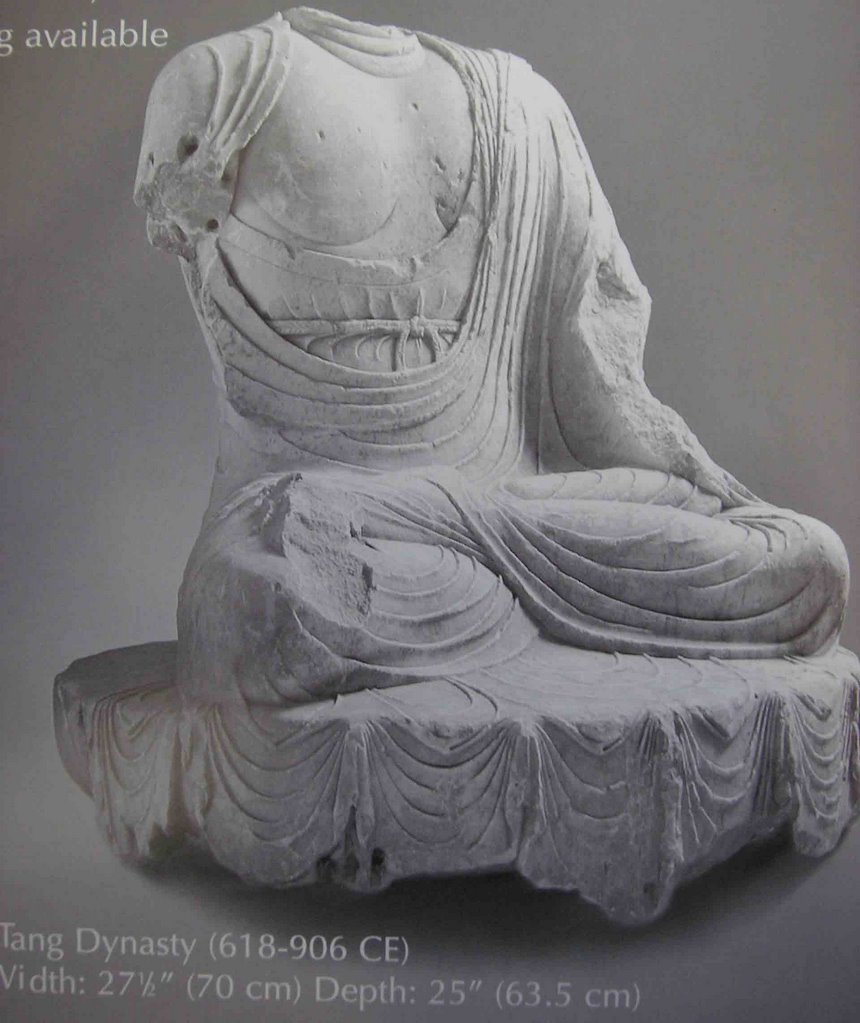
The Buddha’s statements about Nirvana (the state of unwavering pure Selfhood beyond the illusory world of Samsara) are usually described as ‘metaphysical’ because they seem to be describing something that transcends the physical world. The word 'Metaphysics' means literally “after” (not "beyond" or “above”) “physics", and refers to the arrangement of Aristotle's writings, in which his books on “first philosophy” were placed after the books on “physics”. This is quite distinct to the popular definition of 'beyond or above the physical reality'. The term should be defined thus: ‘pertaining to questions that cannot be answered by any empirical evidence or criteria’.
As Walter Stace observes:
"On this basis most modern thinkers would doubtless class the Buddha’s Nirvana as metaphysical. But it would not be so to Buddha, because he would not, like most modern empiricists, identify experience with sense-experience. The Buddhist adept claims to have direct experience of Nirvana in this life and without waiting for another life. Therefore for Buddha the conception of Nirvana is not metaphysical but empirical"
Sunday, December 03, 2006
Consciousness is Indivisible
Time and space are basic properties of the Universe.
Consciousness is clearly another.
Time and space are indivisible. We speak of segments: minutes, miles -
but we know that they are not real divisions of time and space - they do not actually have any effect on these basic properties at all. They are convenient units of measurement existing only in the human mind.
Divisions of consciousness are the same. One speaks of 'you and me', 'them and us', but these are words which do not refer to actual things. Consciousness is coextensive with time and space; and, like them, is an indivisible, curved, curlicued, continuum.
'Individuals' seem to have their 'own' thoughts, and act independently; however, action and thought are not what is meant by consciousness. One is conscious of thoughts and actions.
There is nothing wrong with using terms of measurement: 'this millisecond', 'that cubic lightyear', 'me' - as long as one remembers that these terms do not actually divide anything, or cause anything.
Consciousness is clearly another.
Time and space are indivisible. We speak of segments: minutes, miles -
but we know that they are not real divisions of time and space - they do not actually have any effect on these basic properties at all. They are convenient units of measurement existing only in the human mind.
Divisions of consciousness are the same. One speaks of 'you and me', 'them and us', but these are words which do not refer to actual things. Consciousness is coextensive with time and space; and, like them, is an indivisible, curved, curlicued, continuum.
'Individuals' seem to have their 'own' thoughts, and act independently; however, action and thought are not what is meant by consciousness. One is conscious of thoughts and actions.
There is nothing wrong with using terms of measurement: 'this millisecond', 'that cubic lightyear', 'me' - as long as one remembers that these terms do not actually divide anything, or cause anything.
The Nature of Self
What is the nature of the Self?
"What exists in truth is the Self alone. The world, the individual soul, and God are appearances in it. like silver in mother-of-pearl, these three appear at the same time, and disappear at the same time. The Self is that where there is absolutely no "I" thought. That is called "Silence". The Self itself is the world; the Self itself is "I"; the Self itself is God; all is Siva, the Self."
- Sri Ramana Maharshi
"What exists in truth is the Self alone. The world, the individual soul, and God are appearances in it. like silver in mother-of-pearl, these three appear at the same time, and disappear at the same time. The Self is that where there is absolutely no "I" thought. That is called "Silence". The Self itself is the world; the Self itself is "I"; the Self itself is God; all is Siva, the Self."
- Sri Ramana Maharshi
Friday, November 24, 2006
Beam me up Scotty - or maybe not
Some speculations about consciousness from Paul Broks, published in the latest New Scientist:
Mind-body, spirit-substance are false dichotomies.
The ghost in the machine will eventually be exorcised.
Mind transposition - the uploading, downloading, and extension
of the human mind, via AI directly connected to the brain- will lead, in the future, to a transformed concept of what consciousness/selfhood is.
The brain will be 'reverse engineered' by future cognitive science.
Its subtle cognitive architecture will be precisely modelled through high res neuroimaging. Eventually hardware and software will be available for the implementation of human intelligence in a non-biological substrate.
"Consciousness" will go the way of phlogiston, the theoretical substance that scientists once used to explain fire.
The idea that there is a 'hard problem' of consciousness [explaining how
neurons can give rise to a subject] will be considered a red herring.
"but as our post-millenial neuroscientists marvelled at the sparkling, dare I say spectral, patterns cascading from their high-resolution brain scanners, they were nagged by a mischievous question: who is running the show? How does the the brain, with its diverse and distributed functions, come to arrive at a unified sense of identity? 'Soul' doesn't figure in the lexicon of neuroscience, but what about the soul's secular cousin, 'self'? Could we speak of a person's brain without speaking of the person? Was the self merely the sum of its cerebral parts? The Illusion of the ghost in the machine was compelling - the natural intuition that somewhere in the brain there lurks an observing 'I', an experiencer of experiences, thinking of thoughts and controller of actions."
"Belief in an inner essence, or central core, of personhood, was called 'ego theory'. The alternative, 'bundle theory', made more neurological sense but offended our deepest intuitions. Too bad, I thought. We should learn to face facts. The philosopher Derek Parfit put it starkly: we are not what we believe ourselves to be. Actions and experiences are interconnected but ownerless. A human life consists of enmeshed mental states rolling like tumbleweed down the days and years, but with no one (no thing) at the centre."
Parfit's famous thought experiment: Imagine your body is teleported by
a process that destroys it, converts it to information, sends the information, then reconstructs it perfectly at a destination. All the contents of your mind arrive intact. You go about your life as if nothing has happened.
If you are comfortable with this scenario then you should be comfortable with bundle theory - the observing "I" is no more than patterns of energy and information, which can be disrupted and reconstituted without destroying the self - because there is no self to destroy.
An ego theorist would believe that the reconstituted body is not 'you' but a replica. 'You' have been destroyed during teleportation. This is a problem
that could have been explored in more depth in by Iain M Banks, in his SF novel 'Ilium', in which people 'fax' themselves around. Good read though.
"Incidentally" writes Broks, "we see here an inversion of conventional thinking. Those who believe in an essence, or soul, suddenly become materialists, dreading the loss if the 'original' body. But those of us who don't hold such beliefs are prepared to countenance a life after bodily death."
"These words that you are now reading, whose are they? Yours or mine? The point of writing is to take charge of the voice in someone else's head. This is what I am doing. My words have taken possession of the language circuits of your brain. I have become, if only transiently, your inner voice. Doesn't that mean, in a certain sense, that I have become you (or you me)?"
With inevitable future AI brain-extension/mind-interconnectivity (netmind), knowledge and experience will be shared directly by increasingly collective minds. The sense of separate selves will eventually disappear. The sense of self will disperse... perhaps infinitely.
Mind-body, spirit-substance are false dichotomies.
The ghost in the machine will eventually be exorcised.
Mind transposition - the uploading, downloading, and extension
of the human mind, via AI directly connected to the brain- will lead, in the future, to a transformed concept of what consciousness/selfhood is.
The brain will be 'reverse engineered' by future cognitive science.
Its subtle cognitive architecture will be precisely modelled through high res neuroimaging. Eventually hardware and software will be available for the implementation of human intelligence in a non-biological substrate.
"Consciousness" will go the way of phlogiston, the theoretical substance that scientists once used to explain fire.
The idea that there is a 'hard problem' of consciousness [explaining how
neurons can give rise to a subject] will be considered a red herring.
"but as our post-millenial neuroscientists marvelled at the sparkling, dare I say spectral, patterns cascading from their high-resolution brain scanners, they were nagged by a mischievous question: who is running the show? How does the the brain, with its diverse and distributed functions, come to arrive at a unified sense of identity? 'Soul' doesn't figure in the lexicon of neuroscience, but what about the soul's secular cousin, 'self'? Could we speak of a person's brain without speaking of the person? Was the self merely the sum of its cerebral parts? The Illusion of the ghost in the machine was compelling - the natural intuition that somewhere in the brain there lurks an observing 'I', an experiencer of experiences, thinking of thoughts and controller of actions."
"Belief in an inner essence, or central core, of personhood, was called 'ego theory'. The alternative, 'bundle theory', made more neurological sense but offended our deepest intuitions. Too bad, I thought. We should learn to face facts. The philosopher Derek Parfit put it starkly: we are not what we believe ourselves to be. Actions and experiences are interconnected but ownerless. A human life consists of enmeshed mental states rolling like tumbleweed down the days and years, but with no one (no thing) at the centre."
Parfit's famous thought experiment: Imagine your body is teleported by
a process that destroys it, converts it to information, sends the information, then reconstructs it perfectly at a destination. All the contents of your mind arrive intact. You go about your life as if nothing has happened.
If you are comfortable with this scenario then you should be comfortable with bundle theory - the observing "I" is no more than patterns of energy and information, which can be disrupted and reconstituted without destroying the self - because there is no self to destroy.
An ego theorist would believe that the reconstituted body is not 'you' but a replica. 'You' have been destroyed during teleportation. This is a problem
that could have been explored in more depth in by Iain M Banks, in his SF novel 'Ilium', in which people 'fax' themselves around. Good read though.
"Incidentally" writes Broks, "we see here an inversion of conventional thinking. Those who believe in an essence, or soul, suddenly become materialists, dreading the loss if the 'original' body. But those of us who don't hold such beliefs are prepared to countenance a life after bodily death."
"These words that you are now reading, whose are they? Yours or mine? The point of writing is to take charge of the voice in someone else's head. This is what I am doing. My words have taken possession of the language circuits of your brain. I have become, if only transiently, your inner voice. Doesn't that mean, in a certain sense, that I have become you (or you me)?"
With inevitable future AI brain-extension/mind-interconnectivity (netmind), knowledge and experience will be shared directly by increasingly collective minds. The sense of separate selves will eventually disappear. The sense of self will disperse... perhaps infinitely.
Monday, November 20, 2006
The Crazy Old Aunt
From the photo in the New Scientist article covering the recent symposium in California on science and religion, which debated whether or not the scientific community should try to abolish religion entirely, it appeared as if there was only one female in an audience entirely populated by greying and balding men. I wonder what this lone woman made of cosmologist Steven Weinberg's personification of religion as a "crazy old aunt" who tells lies and stirs up mischief, but who has been around for a long time and will probably be missed when she goes. Considering that religion (at least since the ancient priestess cults died out) has been run by men, it's an odd comparison.
Perhaps if women had been in charge of religion, we would not be having this religion-v-science debate; religion would probably have developed as a natural collective affirmation/celebration of human ideals and ethics that are probably innate, in the sense that they evolved naturally in human societies, but need to be identified, nurtured and maintained by men and women alike. We might have had religious organisations that, instead of instilling fear of the supernatural, promoted deep reverence for the natural world; a reverence not antithetical to science.
Sunday, November 19, 2006
Adaptation of Shri Shankaracharya's Six Stanzas on Nirvana
It is not mind,
consciousness,
thought or emotion,
attention, memory
sense impressions, the senses,
phenomena, the body, the physical world,
desires or aversions, pleasure or pain,
self-importance, conditioning,
virtue or vice, sacred or profane,
agent or acted upon, dead or living,
it is deathless and birthless,
it is has no properties or qualities
It is without an other,
it is without relatives, friends, teachers,
it is even without the state of being alone.
It is formless and unimaginable.
It is coextensive with all that is,
yet it is imperceptible.
It is not the experience of nirvana or liberation;
it cannot be experienced or known.
It does not exist,
yet it is even without the quality of being non-existent.
I am that.
consciousness,
thought or emotion,
attention, memory
sense impressions, the senses,
phenomena, the body, the physical world,
desires or aversions, pleasure or pain,
self-importance, conditioning,
virtue or vice, sacred or profane,
agent or acted upon, dead or living,
it is deathless and birthless,
it is has no properties or qualities
It is without an other,
it is without relatives, friends, teachers,
it is even without the state of being alone.
It is formless and unimaginable.
It is coextensive with all that is,
yet it is imperceptible.
It is not the experience of nirvana or liberation;
it cannot be experienced or known.
It does not exist,
yet it is even without the quality of being non-existent.
I am that.
Reality
Generally what we understand by 'reality' is the world of 'physical' objects, but also abstract-seeming notions such as space and time. Mind is not 'real' in the same sense. It is considered by many to be a secondary kind of reality, probably an emergent property of matter, similar to information. Consciousness may be epiphenomenal, that is, having no influence on the way that our bodies behave beyond what physical laws demand, having no additional 'reality' to the matter generating it. Some philosophers, argue to the contrary, that the mental world is primary, and the material world secondary and emergent. They claim primacy for the mental by virtue of the fact that we primarily inhabit the mental. To avoid an unpleasant solipsism they do not usually deny the reality of other selves. Roger Penrose (Prof of Maths at Oxford Uni) sees the notion of the primacy of mental reality, and the emergence of the physical from consciousness, as lopsided.
"Even if such a solipsistic basis is not adopted, so that the totality of all conscious experience is taken as the primary reality, I still have great difficulty. This would seem to demand that 'external reality' is merely something that emerges from some kind of majority-wins voting amongst all of us taken together. I cannot see that such an emergent picture could have anything like the robustness and precision that we seem to see outside ourselves, stretching away seemingly endlessly in all directions in space and time, and inwards to minutest levels that we do not directly perceive with our senses."
Penrose recognises that the emergence of consiousness (by which I guess he is talking about subjective, personal experience) from the "seemingly purely calculational, unfeeling and utterly impersonal laws of physics that appear to govern the behaviour of all material things" is problematic and mysterious. But he also points out that these laws are incredibly precise and intricate.
The 'physical' objects that we think of as most real (say a table) are composed of atoms, which are composed of more elementary particles which have an indeterminate reality. They seem to exist only as solutions to mathematical equations. One of the things that makes quantum mechanics really strange is the notion that all electrons, for example, are indistinguishable from one another: we cannot talk of 'this electron' and 'that electron', but only of the system they inhabit. At its most elemental level, perhaps, the physical may be mathematical information - similar in its reality to consciousness. Of course, it may turn out that there is something not quite right with present-day quantum theory, and a notion that is more in accordance with our experiences may emerge. There is no sign of this yet however.
Penrose writes that "many philosophers would argue that mathematics consists merely of idealised mental concepts, and if the world of mathematics is to be regarded as arising ultimately from our minds, then we have reached a circularity: our minds arise from the functioning of our physical brains, and the very precise physical laws that underlie that functioning are grounded in the mathematics that requires our brains for its existence." Penrose seeks to avoid this immediate paradox by allowing the Platonic mathematical world its own timeless and locationless existence. while allowing it to be accessible to us through mental activity.
Penrose allows for three different kinds of reality: the physical, the mental and the Platonic mathematical, with something, (as yet) profoundly mysterious in the relations between the three. Penrose concludes that we cannot properly address the question of the reality of the physical until we understand its connection with the other two realities.
"Even if such a solipsistic basis is not adopted, so that the totality of all conscious experience is taken as the primary reality, I still have great difficulty. This would seem to demand that 'external reality' is merely something that emerges from some kind of majority-wins voting amongst all of us taken together. I cannot see that such an emergent picture could have anything like the robustness and precision that we seem to see outside ourselves, stretching away seemingly endlessly in all directions in space and time, and inwards to minutest levels that we do not directly perceive with our senses."
Penrose recognises that the emergence of consiousness (by which I guess he is talking about subjective, personal experience) from the "seemingly purely calculational, unfeeling and utterly impersonal laws of physics that appear to govern the behaviour of all material things" is problematic and mysterious. But he also points out that these laws are incredibly precise and intricate.
The 'physical' objects that we think of as most real (say a table) are composed of atoms, which are composed of more elementary particles which have an indeterminate reality. They seem to exist only as solutions to mathematical equations. One of the things that makes quantum mechanics really strange is the notion that all electrons, for example, are indistinguishable from one another: we cannot talk of 'this electron' and 'that electron', but only of the system they inhabit. At its most elemental level, perhaps, the physical may be mathematical information - similar in its reality to consciousness. Of course, it may turn out that there is something not quite right with present-day quantum theory, and a notion that is more in accordance with our experiences may emerge. There is no sign of this yet however.
Penrose writes that "many philosophers would argue that mathematics consists merely of idealised mental concepts, and if the world of mathematics is to be regarded as arising ultimately from our minds, then we have reached a circularity: our minds arise from the functioning of our physical brains, and the very precise physical laws that underlie that functioning are grounded in the mathematics that requires our brains for its existence." Penrose seeks to avoid this immediate paradox by allowing the Platonic mathematical world its own timeless and locationless existence. while allowing it to be accessible to us through mental activity.
Penrose allows for three different kinds of reality: the physical, the mental and the Platonic mathematical, with something, (as yet) profoundly mysterious in the relations between the three. Penrose concludes that we cannot properly address the question of the reality of the physical until we understand its connection with the other two realities.
Saturday, November 18, 2006
The Inestimable Self
The individual 'self' is an emergent property of the neurological activity of the brain, a make-sense-of-the-world neurotool similar to that used to construct a sense of future and past. Patricia Churchland, from the University of California, insists that this does not imply that "my self" is not real (it is as real as the brain that generates it, and the world that forms brains). Quite naturally she uses the word 'my' when referring to this self. Episteme correctly does not admit to possessive pronouns being more than convenient labels - 'I' and 'my' do not refer to anything other than the compass of a simulation. A simulation of the future is real, in the sense that it can be perceived, but there is no 'director' of the simulation other than the world itself. Likewise a simulated self can be perceived, and is real, in that sense, but not in the sense of being an entity distinct from the world. The mistake is to believe that there is more than one director (more than one world). If there is a self, it is the world. When it is said that the individual self is an 'illusion' it is not necessarily a denial of the fact that simulated selves exist but a denial of the existence of a 'director' of these simulations other than the world. Churchland argues that 'we' are not 'cheapened' by the fact that 'we' are neurological constructs, because the brain is a wonderful work of art. I would add that a sense of self coextensive with all space and time should be a pretty good source of self-esteem.
Tuesday, November 14, 2006
Wittgenstein and Buddhism
Uma Thurman's Dad writes:
Can all Buddhist nonegocentrist philosophy be described as metaphysics?
Discuss.
Monday, October 30, 2006
Well stone me witless!
‘The first issue for Wittgenstein in dealing with sensations was the issue of possession. "How do we know who owns particular sensations? This is also Edelman’s first move "only through direct possession by an individual of the appropriate morphology and experience do qualia [sensations that something is conscious of?] arise.
I do not, Wittgenstein points out, either possess or require behavioural or other criterial evidence to justify my utterance of first person, present tense psychological statements such as 'I have toothache', which involve the use of 'I' as subject.
It is a mistake to assume from this that 'I' used as subject refers to an immaterial ego or self seated in my body - on the contrary, Wittgenstein argues, the truth is that 'I' in its subject use is not a referring expression at all - it does not function as the name of anything.
Wittgenstein realised that if we examine carefully what we think we are refering to, when we refer to ourselves, ultimately we cannot find anything. The individual self is illusory.
I do not, Wittgenstein points out, either possess or require behavioural or other criterial evidence to justify my utterance of first person, present tense psychological statements such as 'I have toothache', which involve the use of 'I' as subject.
It is a mistake to assume from this that 'I' used as subject refers to an immaterial ego or self seated in my body - on the contrary, Wittgenstein argues, the truth is that 'I' in its subject use is not a referring expression at all - it does not function as the name of anything.
Wittgenstein realised that if we examine carefully what we think we are refering to, when we refer to ourselves, ultimately we cannot find anything. The individual self is illusory.
Self-consciousness
The Feeling of Mattering to Oneself
We are still unable to say what consciousness is. It is a mysterious phenomenon, but according to Nicholas Humphrey it is precisely this elusive quality that is the whole point of consciousness. "It has to be like that, he says, because it evolved to give its possessors a sense of owning a ‘self worth having’." If something is worth having, it is worth preserving.
Yet consciousness is not actually necessary for self-preservation; indeed, it has no obvious function. A hypothetical robot could be programmed to react to threats and preserve itself, without having a sense of self-ownership or even consciousness. In primitive creatures there is no consciouness of self, merely perception of sensory data. Unconscious, automatic reflex responses preserve the organism from harm. Unconscious self-maintainance still occurs in humans. In the phenomenon known as ‘blindsight’ human test subjects perceive objects, and may react to them, without registering them consciously.
As organisms evolved through natural selection, and became better and better at self-preservation, they began to develop forethought and the ability to project an imaginary self into future hypothetical situations, the better to prepare for them and avoid threats. They began to identify with this imaginary self. Ego, or the sense of owning oneself, of mattering to oneself, is a byproduct of projection into the future which does not exist.
Is this identification with a fictional self necessary in order to function in a complex human environment, or is it just a vestigial institution to be discarded in the evolutionary process? Would a superfunctional, supersophisticated artificial intelligence understand the human need for the sense of self to be considered real or meaningful? Chris Nunn, in ‘New Scientist’, speculates that "even if consciousness evolved because it provided a sense that individuals matter, it could be the case that they do matter in some non-illusory sense. Maybe their mattering was a truth that provided the basis for evolution to work on."
Que?
Humphrey - along with other figures in consciousness studies, such as Richard Dawkins and Daniel Dennet - holds the reductionist view that consciousness should probably seen as an illusionary property. Interestingly, the idea of an illusory human subject is also favoured by many theologians.
We are still unable to say what consciousness is. It is a mysterious phenomenon, but according to Nicholas Humphrey it is precisely this elusive quality that is the whole point of consciousness. "It has to be like that, he says, because it evolved to give its possessors a sense of owning a ‘self worth having’." If something is worth having, it is worth preserving.
Yet consciousness is not actually necessary for self-preservation; indeed, it has no obvious function. A hypothetical robot could be programmed to react to threats and preserve itself, without having a sense of self-ownership or even consciousness. In primitive creatures there is no consciouness of self, merely perception of sensory data. Unconscious, automatic reflex responses preserve the organism from harm. Unconscious self-maintainance still occurs in humans. In the phenomenon known as ‘blindsight’ human test subjects perceive objects, and may react to them, without registering them consciously.
As organisms evolved through natural selection, and became better and better at self-preservation, they began to develop forethought and the ability to project an imaginary self into future hypothetical situations, the better to prepare for them and avoid threats. They began to identify with this imaginary self. Ego, or the sense of owning oneself, of mattering to oneself, is a byproduct of projection into the future which does not exist.
Is this identification with a fictional self necessary in order to function in a complex human environment, or is it just a vestigial institution to be discarded in the evolutionary process? Would a superfunctional, supersophisticated artificial intelligence understand the human need for the sense of self to be considered real or meaningful? Chris Nunn, in ‘New Scientist’, speculates that "even if consciousness evolved because it provided a sense that individuals matter, it could be the case that they do matter in some non-illusory sense. Maybe their mattering was a truth that provided the basis for evolution to work on."
Que?
Humphrey - along with other figures in consciousness studies, such as Richard Dawkins and Daniel Dennet - holds the reductionist view that consciousness should probably seen as an illusionary property. Interestingly, the idea of an illusory human subject is also favoured by many theologians.
Monday, October 23, 2006
Ownership of Self in Consciousness
Like Locke, Antonio Damasio stresses quality of ownership, of self, of self-awareness in consciousness.
Damasio holds that the neurobiology of consciousness faces two fundamental general problems: ‘the problem of how the movie-in-the-brain is generated, and the problem of how the brain also generates the sense that there is an owner and observer for that movie.’ Extended consciousness, as he calls it, ‘provides the organism with an elaborate sense of self’. Analogously to Locke, Damasio believes that besides the ‘images of what we perceive externally’, there is also ‘this other presence that signifies you, as observer of the things imaged, potential actor on the things imaged. There is a presence of you in a particular relationship with some object. If there were no such presence, how would your thoughts belong to you?’ And like William James, he holds that the self is a feeling: ‘the simplest form of such a presence is also an image, actually the kind of image that constitutes a feeling. In that perspective, the presence of you is the feeling of what happens when your being is modified by the acts of apprehending something. The presence never quits, from the moment of awakening to the moment sleep begins. The presence must be there or there is no you.’
Damasio holds that the neurobiology of consciousness faces two fundamental general problems: ‘the problem of how the movie-in-the-brain is generated, and the problem of how the brain also generates the sense that there is an owner and observer for that movie.’ Extended consciousness, as he calls it, ‘provides the organism with an elaborate sense of self’. Analogously to Locke, Damasio believes that besides the ‘images of what we perceive externally’, there is also ‘this other presence that signifies you, as observer of the things imaged, potential actor on the things imaged. There is a presence of you in a particular relationship with some object. If there were no such presence, how would your thoughts belong to you?’ And like William James, he holds that the self is a feeling: ‘the simplest form of such a presence is also an image, actually the kind of image that constitutes a feeling. In that perspective, the presence of you is the feeling of what happens when your being is modified by the acts of apprehending something. The presence never quits, from the moment of awakening to the moment sleep begins. The presence must be there or there is no you.’
Monday, October 16, 2006
Liberalism
The Australian Prime Minister recently praised Thatcher, Reagan and John Paul II for being the three main figures who dismantled soviet communism, the enemy of western liberal democracy - I thought it sort of rotted from within, but that's another story - Yet JP II described liberal democracy as a "culture of death" in his encyclical ‘Gospel of Life’.
John Milbank, in support of the papal view, wrote:
"recent events" [does he mean the War in Iraq?]"demonstrate that liberal democracy can itself devolve into a mode of tyranny. This occurs for a variety of reasons. An intrinsic indifference to truth, as opposed to majority opinion, means in practice that the manipulation of opinion will usually carry the day. Governments then typically discover that the manipulation of fear is more effective than the manipulation of promise. This is in keeping with the central premises of liberalism, which, as Pierre Manent says, are based in Manichean fashion upon the ontological primacy of evil and violence: at the beginning is a threatened individual, piece of property, or racial terrain."
Milbank needs to clarify what he means by ‘liberalism’.
"In the US, the word ‘liberalism’ belongs above all to the left of the political spectrum, while on the European continent it belongs to the right. In one case, liberalism is the opposite of conservatism, while in the other it could in fact be confused with it. For most Europeans, the most typical ‘liberal’ politicians of the second half of the twentieth century are Margaret Thatcher and Ronald Reagan. In Europe, liberalism is defined above all by individualism, belief in free exchange and the omnipotence of the market, and the critique of the large state."
-Alain de Benoist, ‘Reply to Milbank’, Telos Spring 2006
John Milbank, in support of the papal view, wrote:
"recent events" [does he mean the War in Iraq?]"demonstrate that liberal democracy can itself devolve into a mode of tyranny. This occurs for a variety of reasons. An intrinsic indifference to truth, as opposed to majority opinion, means in practice that the manipulation of opinion will usually carry the day. Governments then typically discover that the manipulation of fear is more effective than the manipulation of promise. This is in keeping with the central premises of liberalism, which, as Pierre Manent says, are based in Manichean fashion upon the ontological primacy of evil and violence: at the beginning is a threatened individual, piece of property, or racial terrain."
Milbank needs to clarify what he means by ‘liberalism’.
"In the US, the word ‘liberalism’ belongs above all to the left of the political spectrum, while on the European continent it belongs to the right. In one case, liberalism is the opposite of conservatism, while in the other it could in fact be confused with it. For most Europeans, the most typical ‘liberal’ politicians of the second half of the twentieth century are Margaret Thatcher and Ronald Reagan. In Europe, liberalism is defined above all by individualism, belief in free exchange and the omnipotence of the market, and the critique of the large state."
-Alain de Benoist, ‘Reply to Milbank’, Telos Spring 2006
Friday, October 06, 2006
Richard Dawkins
In her review of Richard Dawkins' book 'The God Delusion', Mary Midgley points out that Dawkins is labouring under the same flawed ideology he is attacking.
Correctly linking fundamentalist religion with atrocities throughout history, he proposes that science should replace religion entirely. ("Imagine there's no Heaven...no religion too").
This is rather like saying that because American and Nazi social Darwinist scientists misappropriated Darwin's ideas for racist ends, ultimately leading to the Holocaust, all science should be done away with.
By redefining Pantheism and Buddhism as non-religions, Dawkins tries to steer around the fact that many of the greatest scientists, such as Einstein, had pantheistic religious attitudes, and that Buddhism has not been credited with much in the way of atrocities. A religion with a ubiquitous god (Pantheism), or one without the concept of god(Buddhism), can still be a religion in the proper sense of the word. Pantheism does not even entail a belief in the supernatural or metaphysical, since god and world are seen as coextensive.
It could be argued in fact that the removal of religion by Stalin, Hitler and Pol Pot, aided their horrendous crimes, by removing all vestiges of moral conscience in the perpetrators. When it comes to mindless violence, atheist dictatorships do not have a much better record than theocracies.
Midgley is to be commended for pointing out the pressing need to find the causes of fundamentalist religious thinking rather than simply reacting against it. If scientists react, they fall in to the same trap as religious opponents of evolution reacting to the misuse of Darwin's ideas.
Religion - particularly in its more introspective forms: Sufism, Zen, Gnosticism - is concerned mainly with self-knowledge (or should be), while science is concerned with knowledge of the world. The false rivalry between Science and Religion largely disappears when, like Einstein, one experiences self and world as a continuum.
The Buddha recognised that bodha (Self-knowledge) and dharma (religion) are codependent. Ultimately, however, the realisation of the Self supersedes human religious mores.
Self-knowledge is of great advantage to scientists, helping them to see when their prejudices and desires are distorting their objectivity, as was the case with social Darwinism.
-Jeronimus
Correctly linking fundamentalist religion with atrocities throughout history, he proposes that science should replace religion entirely. ("Imagine there's no Heaven...no religion too").
This is rather like saying that because American and Nazi social Darwinist scientists misappropriated Darwin's ideas for racist ends, ultimately leading to the Holocaust, all science should be done away with.
By redefining Pantheism and Buddhism as non-religions, Dawkins tries to steer around the fact that many of the greatest scientists, such as Einstein, had pantheistic religious attitudes, and that Buddhism has not been credited with much in the way of atrocities. A religion with a ubiquitous god (Pantheism), or one without the concept of god(Buddhism), can still be a religion in the proper sense of the word. Pantheism does not even entail a belief in the supernatural or metaphysical, since god and world are seen as coextensive.
It could be argued in fact that the removal of religion by Stalin, Hitler and Pol Pot, aided their horrendous crimes, by removing all vestiges of moral conscience in the perpetrators. When it comes to mindless violence, atheist dictatorships do not have a much better record than theocracies.
Midgley is to be commended for pointing out the pressing need to find the causes of fundamentalist religious thinking rather than simply reacting against it. If scientists react, they fall in to the same trap as religious opponents of evolution reacting to the misuse of Darwin's ideas.
Religion - particularly in its more introspective forms: Sufism, Zen, Gnosticism - is concerned mainly with self-knowledge (or should be), while science is concerned with knowledge of the world. The false rivalry between Science and Religion largely disappears when, like Einstein, one experiences self and world as a continuum.
The Buddha recognised that bodha (Self-knowledge) and dharma (religion) are codependent. Ultimately, however, the realisation of the Self supersedes human religious mores.
Self-knowledge is of great advantage to scientists, helping them to see when their prejudices and desires are distorting their objectivity, as was the case with social Darwinism.
-Jeronimus
Sunday, October 01, 2006
Parallax Thinking and the Problem of Personal Identity
"[Heisenberg asserted that] the object can never be known, owing to the interference of our own observational system, the insertion of our own point of view and related equipment between ourselves and the reality in question. Heisenberg is then truly 'postmodern' in the assertion of an absolute indeterminacy of the real or the object, which withdraws into the status of a Kantian noumenon. In parallax thinking, however, the object can certainly be determined, but only indirectly, by way of a triangulation based on the incommensurability of the observations. The object thus is unrepresentable: it constitutes precisely that gap or inner distance which Lacan theorised for the psyche, and which renders personal identity forever problematic...The great binary oppositions - subject v. object, materialism v. idealism, economics v. politics - are all ways of naming this fundamental gap..."
-Frederic Jameson
-Frederic Jameson
Subscribe to:
Posts (Atom)